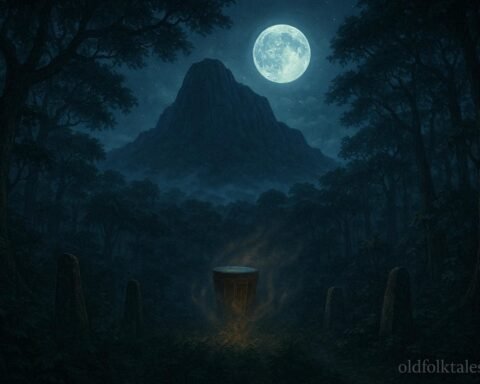
Long ago, when the forests of Gabon stretched unbroken across the land and the Ogooué River flowed through territories untouched by modern roads, the Myene people lived in thriving communities along its banks. The river was more than a source of water and food. It served as a highway connecting villages, a source of livelihood for fishermen, and a sacred pathway linking the living to the wisdom of their ancestors. Elders often taught that every bend of the river held a memory and that the spirits of past generations traveled within its currents, guiding those who respected its waters.
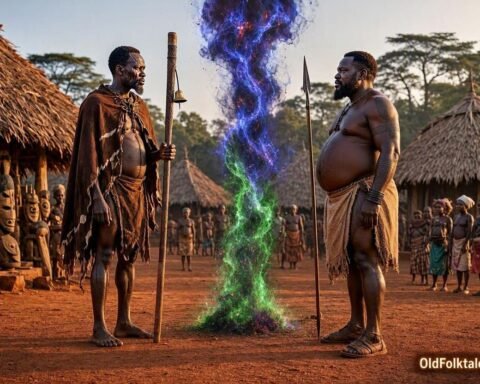
During one period of great change, several Myene settlements began facing growing challenges. Fish became harder to find in certain areas, fertile land near some villages became limited, and expanding populations placed pressure on available resources. Concerned about the future, the elders gathered beneath a large meeting tree to discuss what should be done. For many days they debated, shared observations, and sought guidance through traditional ceremonies. Eventually, they agreed that part of the community would embark on a migration downstream to discover new lands where future generations could build prosperous settlements.
The decision was welcomed by some and feared by others. Leaving ancestral homes was never easy. Many families worried about the dangers hidden along unfamiliar sections of the river. Others feared losing touch with the traditions and memories that connected them to their ancestors. Yet the elders reminded everyone that migration had always been part of their history. Their ancestors had traveled before them, following rivers and signs through the forest to establish new communities. This journey, they explained, would simply continue that ancient tradition.
If you enjoyed this story, explore our full West African folktales collection
Preparations began immediately. Skilled craftsmen entered the forest to select enormous trees suitable for canoe building. For months, they carved, polished, and strengthened the vessels. When their work was complete, seven magnificent canoes stood side by side along the riverbank. Each canoe served a special purpose. One carried elders and spiritual leaders. Another carried families with young children. Others transported hunters, builders, seeds, farming tools, fishing equipment, and provisions for the long journey ahead.
The seventh canoe held the most treasured cargo of all. Known as the Canoe of Memory, it carried sacred objects passed down through countless generations. Inside were ancestral carvings, ceremonial ornaments, symbolic artifacts, traditional instruments, and items connected to the history of the people. The elders believed that these objects represented the collective memory of the community. While traditions lived in stories and songs, the Canoe of Memory served as a physical reminder of who they were and where they had come from.
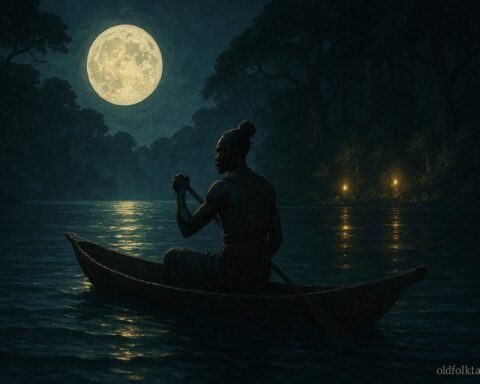
When the day of departure finally arrived, the entire community gathered along the riverbank. Songs filled the air as blessings were offered for safe travels. Elders poured water into the river as an offering to the ancestors and asked for protection throughout the journey. Families embraced loved ones remaining behind, knowing they might not see one another again for many seasons. Then, as the morning sun rose above the forest, the seven canoes pushed away from the shore and began their voyage along the Ogooué.
For many days, the migration progressed smoothly. The travelers passed through breathtaking landscapes where dense rainforests leaned over the riverbanks and wildlife filled the trees with sound. They encountered friendly fishing villages and exchanged greetings with communities they met along the way. Each evening, the canoes stopped beside the river, and campfires illuminated the darkness. Around those fires, elders shared stories about their ancestors, ensuring that younger generations understood the significance of the journey they were undertaking.
As the days turned into weeks, confidence grew among the travelers. Many believed the ancestors had blessed the migration. The river remained calm, food supplies were plentiful, and no major obstacles appeared along their path. Yet one elder named Mbina remained cautious. Having traveled widely during his youth, he understood how quickly conditions could change along the great river. He often reminded the younger travelers that success required vigilance as well as faith.
One evening, while the canoes rested near a narrow stretch of river surrounded by towering cliffs and thick forest, Mbina noticed unusual signs. The air felt strangely heavy. Birds that normally filled the evening with song had fallen silent. Even the river seemed quieter than usual. He shared his concerns with the other elders, who agreed that something felt different. Together they performed a small ceremony and offered prayers for protection before everyone settled down to rest.
The following day began peacefully enough. The canoes moved steadily through calm waters beneath clear skies. However, shortly after midday, dark clouds began gathering above the forest. Strong winds emerged unexpectedly, whipping across the river and sending waves crashing against the canoes. Experienced paddlers immediately recognized the danger. Orders were shouted from canoe to canoe as leaders attempted to keep the vessels together.
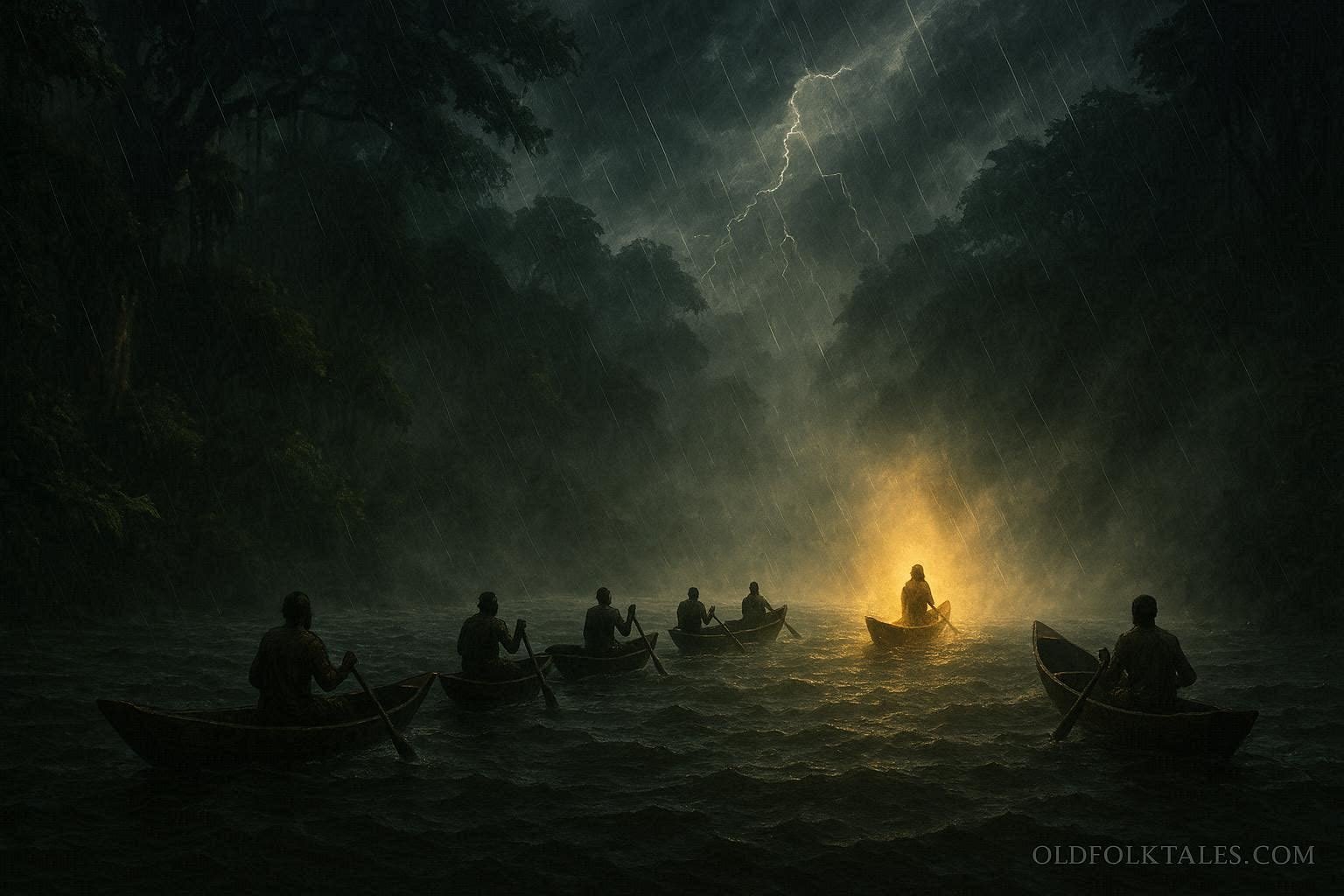
Within moments, a violent storm descended upon the Ogooué. Rain poured from the sky in sheets so dense that visibility disappeared. Thunder shook the air while fierce winds pushed the canoes in different directions. The river transformed into a chaotic force, with powerful currents pulling at the vessels from all sides. Families clung to one another as paddlers struggled desperately to maintain control.
For hours, the storm raged across the river. The travelers fought with all their strength to survive. Eventually, as darkness approached, the winds began to weaken and the rain slowly subsided. Exhausted and shaken, the survivors gathered their canoes and counted their people. Miraculously, no lives had been lost.
But something was wrong.
Only six canoes remained.
The Canoe of Memory had vanished.
At first, everyone assumed it had drifted away during the storm. Search parties immediately set out to find it. They explored nearby channels, inspected islands, and examined every stretch of shoreline they could reach. For days they searched without success. No fragments of the canoe were discovered. No cargo appeared along the riverbanks. It was as though the vessel had simply disappeared from the world.
The loss devastated the community. Many feared that the disappearance of the Canoe of Memory signaled the loss of their connection to the past. Some argued that they should abandon the migration entirely and return home. Others believed they should continue forward while preserving their traditions through stories and teachings. The disagreement threatened to divide the travelers.
During one tense gathering, an elderly woman named Ngalula stood before the community and spoke. She reminded everyone that the ancestors had survived countless hardships without surrendering hope. She explained that memory did not live inside objects alone. It lived within people, within language, within songs, and within the values passed from one generation to the next. Even if the canoe had disappeared, the history of the people remained alive within their hearts.
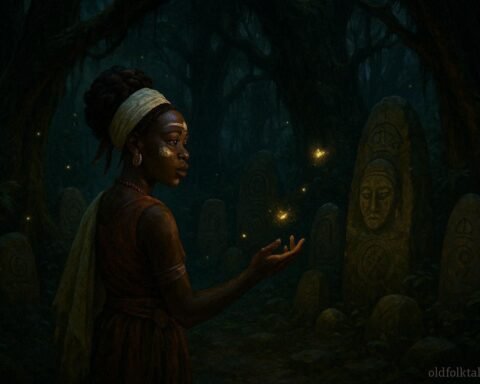
That night, Ngalula experienced a powerful dream. In her vision, she stood upon the banks of the Ogooué beneath a sky filled with stars. She saw seven canoes moving silently across the water. Six traveled openly upon the river, while the seventh moved beneath the surface, glowing with a gentle light. Voices of the ancestors told her that the Canoe of Memory had not been lost. Instead, it had become part of the river itself and would continue guiding future generations whenever they became separated from their heritage.
The next morning, Ngalula shared her vision with the elders. After careful discussion, they accepted her interpretation. Rather than viewing the disappearance as a tragedy, they came to see it as a transformation. The Canoe of Memory had joined the spirit of the river and would forever remain connected to the people.
Encouraged by this belief, the migration continued. Months later, the travelers discovered fertile lands where they established new settlements. Crops flourished, fishing was abundant, and the community prospered. Children grew up hearing the story of the seven canoes and the mysterious disappearance of the seventh vessel.
Generations passed, and the legend spread throughout Myene communities along the Ogooué. Over time, strange stories began to emerge. Fishermen lost in heavy fog reported seeing a solitary canoe moving silently through the mist. Travelers uncertain of their route claimed a mysterious vessel appeared ahead of them, guiding them toward safety before vanishing without explanation. In every account, the canoe matched descriptions of the long-lost Canoe of Memory.
The stories became especially common during periods of hardship. Whenever communities faced uncertainty, migration, or conflict, someone inevitably claimed to have seen the canoe. Whether the sightings were real or imagined mattered little to the people who shared them. The legend reminded everyone that they remained connected to their ancestors regardless of how far they traveled from their original homeland.
Even today, elders along the Ogooué River continue telling the story of the Seven Canoes. They teach that identity is not tied to a single village or location but is carried through memory, tradition, and shared history. The river may change course, settlements may rise and fall, and generations may come and go, but the wisdom of the ancestors remains present for those willing to listen.
And somewhere within the misty waters of the Ogooué, many believe the seventh canoe still waits, ready to guide descendants who have lost their way back to the path of their people.
Click here to explore more Central African folktales
Moral Lesson
True belonging comes from preserving memory, heritage, and identity, no matter how far one travels from home.
Knowledge Check
- Where is the story set?
It is set along the Ogooué River in Gabon. - Why did the Myene people begin a migration?
They were searching for new lands where future generations could prosper. - What was special about the seventh canoe?
It carried sacred objects and ancestral treasures known as the Canoe of Memory. - What happened during the storm?
The Canoe of Memory disappeared and could never be found. - What did Ngalula dream about the canoe?
She dreamed that it became part of the river and continued guiding future generations. - What lesson does the story teach?
Heritage and identity remain alive through memory, tradition, and community.
Source
Gabonese folklore. Adapted from Myene migration traditions preserved in Ogooué migration folklore archives and regional oral history collections.