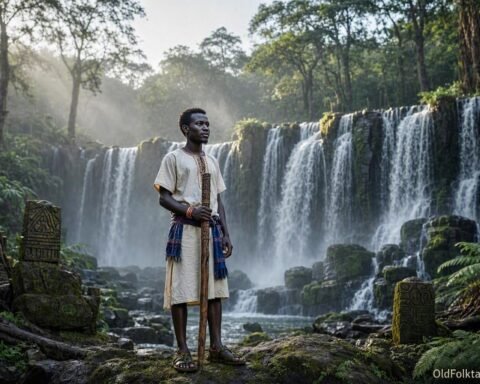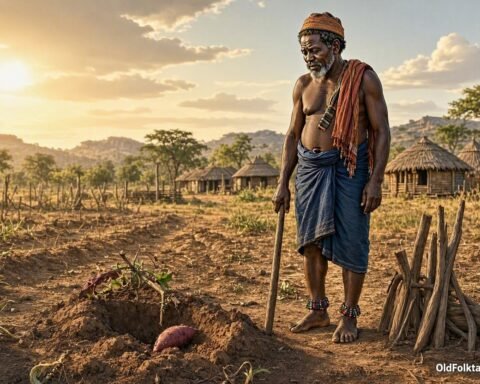
Long ago, in the rolling hills and forested regions of what is now southern Gabon, the Punu people lived in villages connected by family ties, traditions, and stories passed from one generation to the next. Elders served as guardians of memory, preserving the histories of clans through songs, proverbs, ceremonies, and oral storytelling. Every family knew where they came from because their ancestors’ stories were carefully remembered and shared.
Among the Punu, memory was considered a treasure. People believed that a community could survive drought, hardship, and even conflict as long as it remembered its origins. To forget one’s ancestors was to lose a part of oneself. Because of this belief, elders dedicated much of their lives to teaching younger generations about those who had come before them.
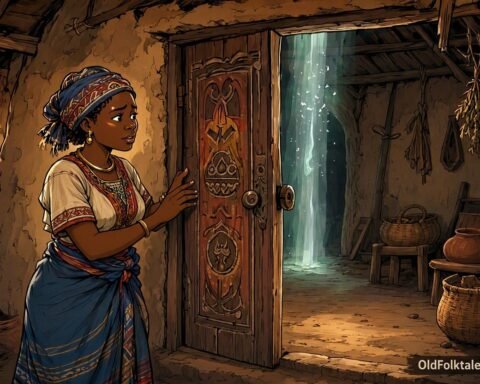
In one such village lived a young woman named Mavela. She was known throughout the community for her patience and extraordinary skill as a weaver. From an early age, she spent countless hours learning from her grandmother, who was regarded as one of the finest artisans in the region. While other children often became restless during long lessons, Mavela listened carefully and practiced diligently until her work displayed remarkable beauty and precision.
Fascinated by this tale? Discover more North African folktales
As she grew older, Mavela’s woven mats, baskets, and ceremonial cloths became admired throughout neighboring settlements. People traveled great distances to purchase her creations. Yet despite her growing reputation, she remained humble and continued learning from her grandmother whenever possible.
One evening, as the village gathered around cooking fires beneath a bright full moon, Mavela’s grandmother shared an old story that few people still remembered. She spoke of a legendary fabric known as the Moon Cloth. According to tradition, it was not an ordinary textile. It was said to possess the ability to reveal forgotten family histories through patterns that appeared beneath moonlight.
The story fascinated Mavela.
She asked whether the cloth truly existed.
Her grandmother smiled thoughtfully before answering.
“Many generations ago, our ancestors believed it did. Some said the cloth was woven by a woman who listened so carefully to the wisdom of the ancestors that their memories became part of her work.”
“What happened to it?” Mavela asked.
“No one knows,” her grandmother replied. “Some say it vanished. Others say the knowledge was simply forgotten.”
For many days, Mavela found herself thinking about the story. The idea of preserving memory through weaving fascinated her. She wondered whether cloth could truly carry stories from one generation to another. Although she understood that the tale might only be a legend, something about it felt important.
Several weeks later, Mavela’s grandmother became ill. As the oldest keeper of family histories in the village, she possessed knowledge that few others remembered. During her illness, younger relatives spent time listening to her stories, hoping to preserve as much wisdom as possible. Mavela remained by her side whenever she could.
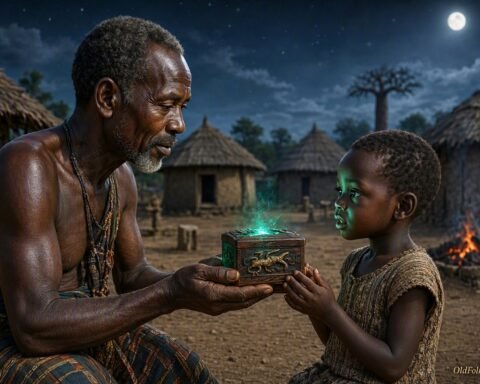
One night, shortly before her grandmother passed away, she called Mavela close.
“There are many ways to remember the past,” she whispered. “Stories are one way. Songs are another. But memory can also live in the work of our hands.”
She then gave Mavela a small bundle wrapped in cloth.
Inside were several unusual weaving tools carved from polished wood and decorated with symbols that appeared extremely old.
“They belonged to my grandmother,” the elder explained. “And to hers before that. Use them wisely.”
After her grandmother’s passing, Mavela treasured the tools and continued practicing her craft. Yet she also felt a growing responsibility to preserve the knowledge her grandmother had shared. She began spending evenings speaking with elders from different families, listening to stories about migrations, marriages, achievements, and hardships that shaped the community’s history.
The more she learned, the more she noticed a troubling pattern.
Many younger villagers knew very little about their own family histories.
Important stories had been forgotten.
Names of ancestors had faded from memory.
Connections between families were becoming unclear.
Concerned by this loss, Mavela searched for a way to preserve what remained.
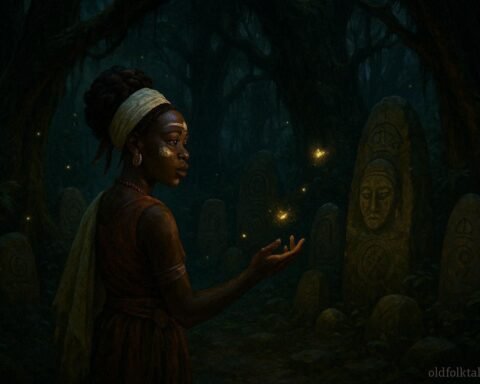
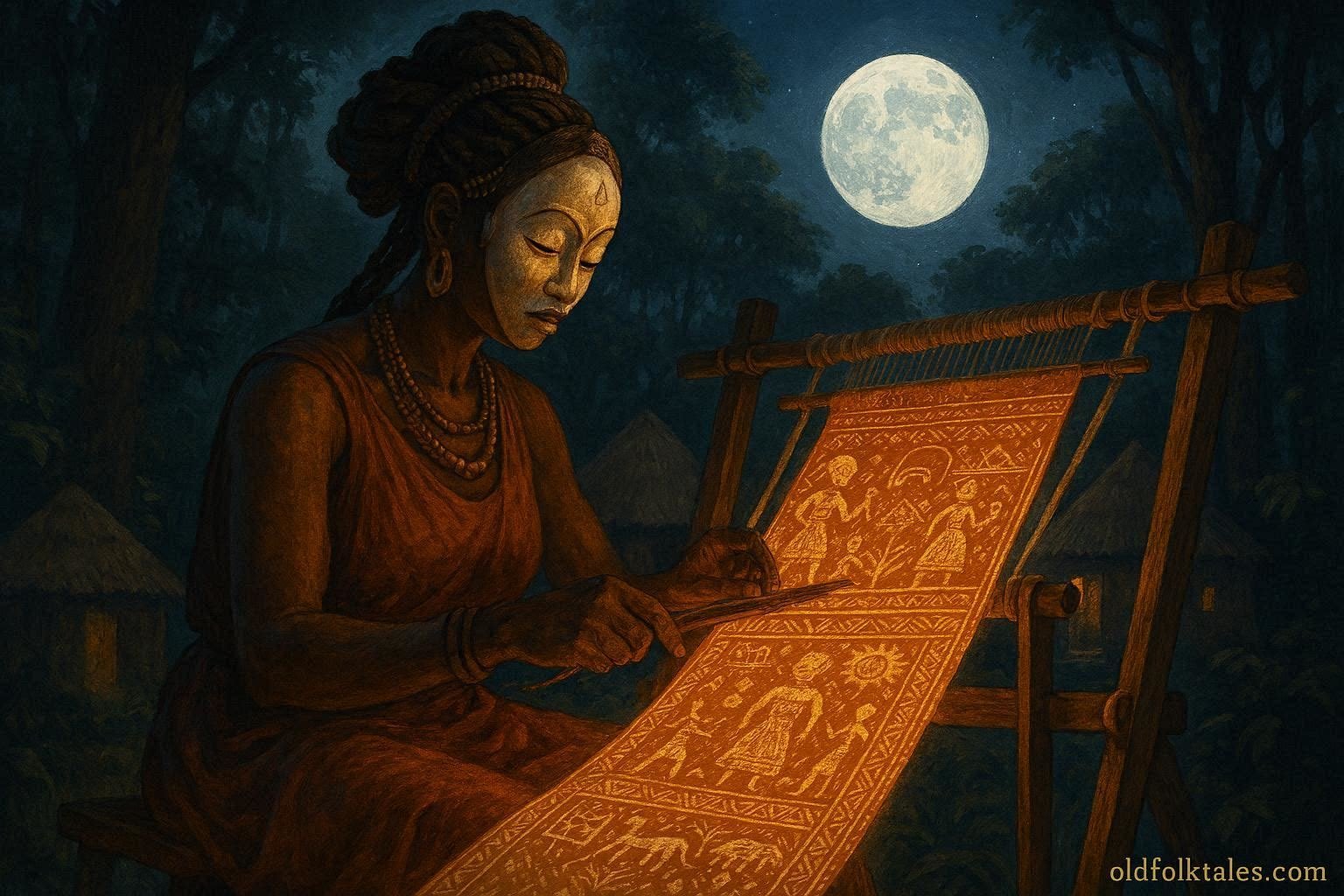
One evening, during a full moon, she decided to experiment with a new weaving project. Using fibers prepared according to techniques passed down through generations, she carefully created patterns inspired by stories she had collected from village elders.
The work took many weeks.
She incorporated symbols representing rivers, journeys, marriages, births, and important events. Every design carried meaning connected to the memories she had gathered.
When the cloth was finally completed, she carried it outside beneath the moonlight.
At first, nothing unusual happened.
Then she noticed something remarkable.
The patterns appeared brighter than before.
Lines and shapes she had not intentionally woven seemed to emerge across the fabric.
Startled, she examined the cloth more closely.
Additional designs slowly became visible beneath the moonlight.
The symbols appeared connected to one another, forming images that seemed to tell a story.
Mavela could hardly believe what she was seeing.
The following evening, she invited several elders to examine the cloth.
As they studied the patterns, they became increasingly astonished.
One elder recognized symbols connected to an ancestral migration that had occurred generations earlier.
Another identified markings representing a forgotten marriage alliance between families.
Others noticed details that corresponded to stories remembered only by the oldest members of the community.
Word spread quickly throughout the village.
People arrived to see the cloth for themselves.
Many recognized symbols connected to their own family histories.
Some learned stories they had never heard before.
Others discovered relationships between clans that had long been forgotten.
The cloth seemed to reveal memories hidden beneath the surface of community life.
Soon villagers began bringing Mavela information about their ancestors.
They shared stories, names, songs, and traditions that had been preserved within their families. Mavela listened carefully and incorporated these memories into new cloths. Each weaving seemed to reveal additional connections and forgotten histories when viewed beneath moonlight.
Over time, the village experienced an unexpected transformation.
Families who had become distant rediscovered ancestral bonds.
Old disagreements softened as people learned about shared histories connecting them to one another.
Younger generations developed a greater appreciation for the sacrifices and achievements of those who came before them.
The cloths did not predict the future or perform miracles.
Their power came from something deeper.
They reminded people who they were.
As Mavela’s reputation grew, visitors arrived from distant communities hoping to learn from her work. Rather than keeping her methods secret, she welcomed those willing to listen and learn. She taught that the true value of the Moon Cloth did not lie in magical patterns but in the careful preservation of memory.
Years later, when Mavela herself became an elder, she continued teaching younger weavers. She encouraged them to collect stories, record traditions, and honor the experiences of previous generations. Under her guidance, weaving became more than a craft. It became a way of safeguarding cultural heritage.
After Mavela’s death, the original Moon Cloth was carefully preserved by the community. Although no one knew whether the unusual patterns were truly supernatural or simply reflected the wisdom woven into the fabric, the cloth remained a powerful symbol.
Generations later, people still told stories about the Weaver of the Moon Cloth.
Some believed the ancestors had guided her hands.
Others believed her gift came from her dedication to listening and learning.
Either way, her work achieved something remarkable.
It helped a community remember itself.
And among the Punu people, there could be no greater gift than that.
Keep reading: Discover more Central African folktales
Moral Lesson
A community preserves its identity by remembering and honoring the stories of those who came before.
Knowledge Check
- Where is the story set?
It is set among the Punu people of Gabon. - Who was Mavela?
She was a gifted young weaver known for her skill and patience. - What was the Moon Cloth?
It was a special cloth whose patterns revealed forgotten family histories. - How did Mavela create the cloth?
She wove symbols inspired by stories and memories collected from village elders. - Why was the Moon Cloth important?
It helped people rediscover their ancestry and preserve community history. - What lesson does the story teach?
Remembering and honoring the past helps preserve identity and cultural heritage.
Source
Gabonese folklore. Adapted from Punu storytelling and textile traditions preserved in Gabon textile folklore archives and Central African oral heritage studies.