In the heart of Tunisia lies the historic city of Kairouan, one of the oldest and most spiritually significant cities in North Africa. Its ancient walls, sacred courtyards, and winding streets have witnessed centuries of devotion, learning, and cultural growth. Generations of scholars, artisans, and families have called it home, each leaving behind traces of their lives within its enduring history.
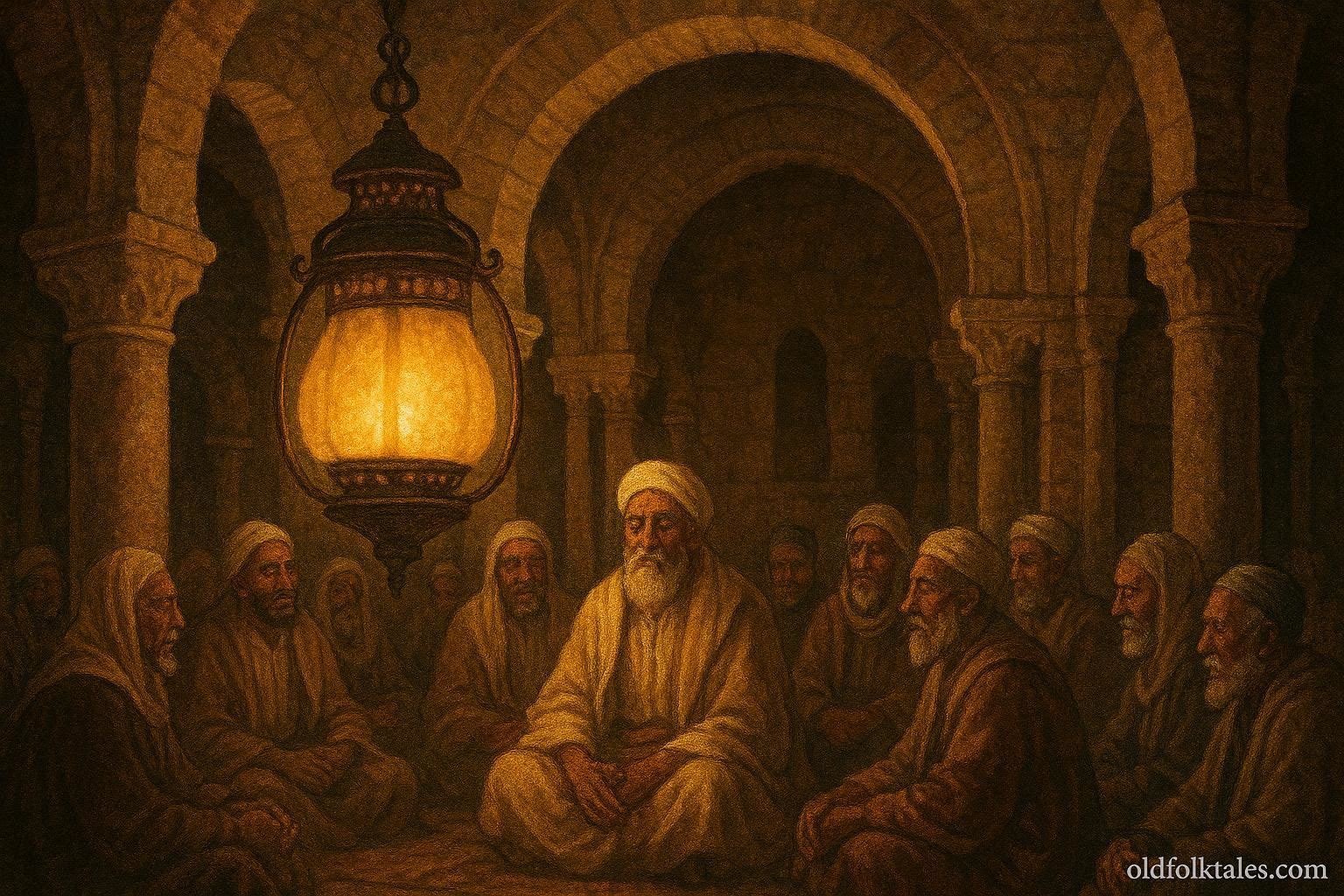
Among the many places of reverence in the city stood an old sanctuary that had long been part of local tradition. Within its walls, people came to reflect, seek guidance, and offer prayers during moments of uncertainty. Elders often spoke of the sanctuary with deep respect, believing it carried the memory of countless generations who had passed through its doors.
It was within this sacred place that the legend of the Lantern of Kairouan began.
According to tradition, a lantern once hung inside the sanctuary during a time of great hardship. It was said to have been placed there by a humble caretaker who believed that light should always be present where decisions affecting the community were made. Over time, as new generations came and went, the lantern was eventually forgotten. Dust gathered around it, and its presence faded from memory.
Don’t miss out: Read more Southern African folktales
Yet the story did not end there.
Elders whispered that the lantern never truly lost its purpose.
Instead, it waited.
Many years later, the city of Kairouan entered a period of uncertainty. Important decisions about leadership, land, and community direction began to divide the people. Different voices emerged, each offering competing visions for the future. While discussions continued, agreement became increasingly difficult to reach.
During this time, strange reports began to circulate.
A caretaker cleaning the sanctuary one evening noticed a faint glow coming from a corner that had long been undisturbed. At first, he thought it was a reflection of moonlight. But as he approached, he discovered an old lantern hanging quietly from a wooden beam. It was covered in dust, untouched for years, yet softly illuminated from within.
Startled, he called others to witness what he had seen.
When community elders arrived, they observed the lantern in silence. Its light was not bright or blinding but gentle, steady, and calming. No one could explain its source.
That same week, the city council was struggling to make an important decision that would affect the future of the community. The disagreement had grown tense, with no clear resolution in sight.
As the debate continued into the evening, news of the glowing lantern spread through the city.
Curious and unsettled, the elders decided to bring the council members to the sanctuary.
When the leaders entered the sacred space, they found the lantern still glowing softly in the darkness. Its light seemed to fill the room without casting shadows. The atmosphere changed immediately. Voices lowered. Tempers eased. Silence replaced argument.
No one spoke for a long moment.
Finally, an elder stepped forward and said, “Perhaps we should listen before we decide.”
The council agreed to pause the discussion.
Over the following days, each group involved in the dispute was invited to share their thoughts inside the sanctuary. Interestingly, whenever discussions grew tense, the lantern’s glow appeared to brighten slightly. When voices softened and understanding increased, the light seemed calm and steady.
People began to interpret this not as magic in a literal sense, but as a reminder.
A reminder to reflect before acting.
A reminder to listen before judging.
A reminder to seek wisdom rather than victory.
As the process continued, the divisions within the city slowly began to ease. Compromises were reached. Agreements were formed. What once seemed impossible became achievable through patience and mutual understanding.
When the final decision was made, it was done in unity rather than conflict.
After that night, the lantern gradually dimmed and returned to its quiet state within the sanctuary.
Life in Kairouan continued, but the story of the lantern spread throughout the city and beyond. Some believed it was a sacred sign, placed to guide the people during moments of confusion. Others saw it as a symbol of collective wisdom, reminding leaders that clarity often comes through calm reflection.
A young caretaker who had witnessed the lantern’s return often reflected on what had happened. When asked about it, he would simply say, “The light did not choose sides. It only reminded us to see more clearly.”
Years passed, and new generations inherited the story. The sanctuary remained a place of reflection, and visitors would sometimes pause near the old corner where the lantern once glowed.
Some claimed they still felt a sense of calm there.
Others believed the lantern would glow again whenever the city needed guidance.
Whether seen as miracle or metaphor, the lesson endured.
Wisdom does not always arrive loudly.
Sometimes it appears quietly, asking only that people slow down and pay attention.
Want to dive deeper? Read more North African folktales today
Moral Lesson
True guidance comes through reflection, patience, and the willingness to listen before making decisions.
Knowledge Check
1. Where is the story set?
It is set in the historic city of Kairouan in Tunisia.
2. What is the Lantern of Kairouan?
It is a forgotten lantern that begins glowing during moments of important community decisions.
3. What did the lantern symbolize?
It symbolized wisdom, reflection, and guidance during times of uncertainty.
4. How did the lantern affect the community?
It helped calm tensions and encouraged people to listen and compromise.
5. What happened after the conflict was resolved?
The lantern dimmed and returned to its quiet state in the sanctuary.
6. What is the main lesson of the story?
Wisdom comes from patience, reflection, and listening before acting.
Source
Adapted from Tunisian Arab folklore traditions preserved in Tunisian oral tradition archives and North African spiritual heritage studies.