In the early days of the Luba Kingdom, when powerful rulers governed vast lands stretching across forests, rivers, and fertile plains, there lived a king whose name was spoken with both admiration and fear.
He was called Nkongolo the Red King.
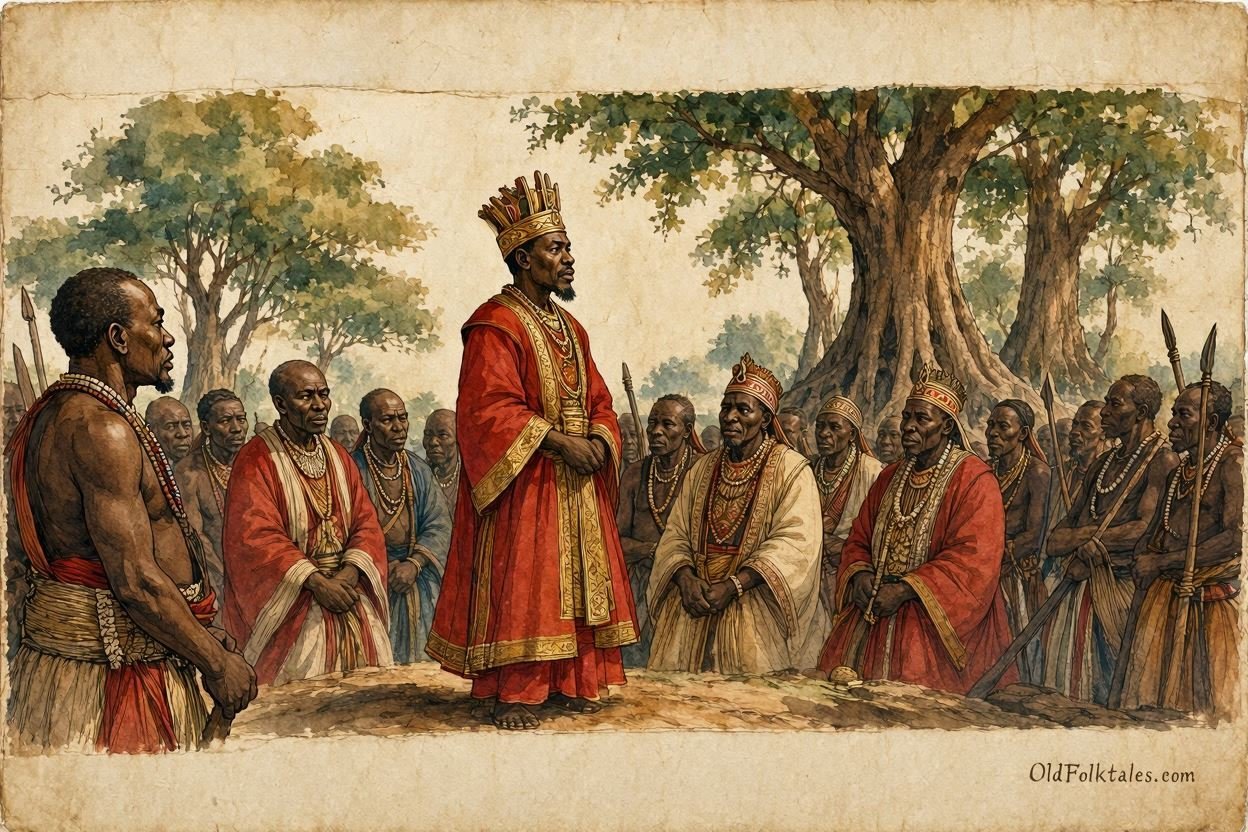
Some said he earned the name because of the brilliant red ornaments and robes he wore during royal ceremonies.
Others believed it reflected his fiery temper, which could change without warning.
Whatever its origin, the name became known throughout the kingdom.
When Nkongolo first became king, many people celebrated.
He was courageous in battle, fearless before enemies, and determined to make the Luba Kingdom respected by neighboring lands.
Under his command, new trade routes were opened.
Villages grew larger.
Travelers arrived from distant regions to exchange goods, ideas, and traditions.
For a time, the kingdom prospered.
But as the years passed, success slowly changed the king.
Looking for more? Explore the magic of East African folktales here
He began to believe that no one possessed wisdom equal to his own.
Instead of listening to experienced elders, he dismissed their advice.
Instead of rewarding honest chiefs, he surrounded himself with those who praised every decision he made.
Whenever someone questioned his judgments, Nkongolo saw not loyalty but rebellion.
Fear gradually replaced trust within the royal court.
The people noticed the change.
Chiefs no longer spoke openly during council meetings.
Farmers worried that larger portions of their harvest would be demanded as tribute.
Merchants hesitated to travel because new taxes grew heavier each season.
Even musicians became cautious, choosing songs that pleased the king rather than those that spoke the truth.
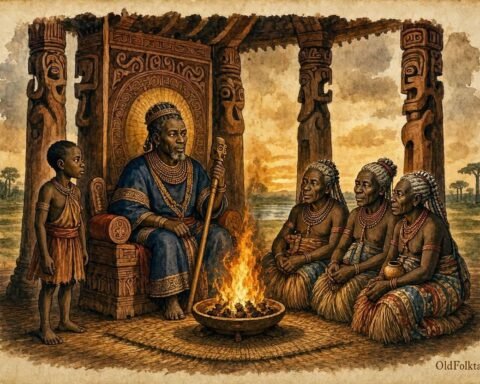
Among the royal family was a young prince named Kalala Ilunga.
Unlike Nkongolo, Kalala believed that strength without justice could never create lasting peace.
He listened to ordinary people, respected the wisdom of elders, and treated everyone with dignity regardless of their position.
Many quietly admired the prince.
The more the people praised Kalala’s character, the more suspicious Nkongolo became.
“He seeks my throne,” the king declared.
His advisers eagerly agreed, though none could offer proof.
The wisest elder stepped forward.
“My king,” he said gently, “a loyal prince strengthens the kingdom. Suspicion without evidence weakens it.”
Nkongolo refused to listen.
Instead, he banished the elder from the royal court.
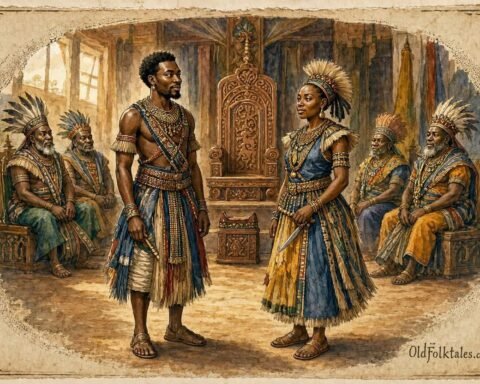
Soon afterward, he ordered Kalala Ilunga to leave the kingdom as well.
The prince departed peacefully, refusing to answer injustice with anger.
As Kalala disappeared beyond the borders of the kingdom, many villagers wept.
They feared that wisdom had been driven away while pride remained upon the throne.
Yet none of them knew that the exile of the young prince would become the beginning of a far greater change in the history of the Luba Kingdom.
After Kalala Ilunga left the kingdom, Nkongolo believed his throne was secure.
“There is no one left to challenge me,” he declared.
But a throne protected by fear is never truly safe.
As the seasons passed, the kingdom began to change.
The elders who had once offered wise counsel remained silent or left the royal court.
Chiefs obeyed the king’s commands but no longer served him with willing hearts.
Farmers harvested their crops with little joy, knowing much of their labor would be taken as tribute.
Merchants chose safer routes through neighboring lands rather than passing through the Luba Kingdom.
The prosperity that had once filled the kingdom slowly faded.
One evening, Nkongolo walked through the royal courtyard expecting to hear music and celebration.
Instead, he found only quiet voices and worried faces.
For the first time, he realized that people obeyed him because they were afraid, not because they respected him.
Far beyond the kingdom’s borders, Kalala Ilunga continued to earn the trust of every community he visited.
He settled disputes fairly, worked alongside farmers, and learned from elders wherever he traveled.
Stories of his wisdom spread from village to village until they eventually reached the Luba chiefs.
The chiefs gathered in secret.
“Our kingdom grows weaker each year,” one elder said.
“A ruler who refuses wise counsel cannot protect the future of the people.”
After much discussion, they agreed to seek out Kalala and ask him to return.
When they found him, Kalala listened quietly to their request.
“I do not wish to return for revenge,” he said. “If I come back, it must be to restore justice and peace.”
The chiefs gladly accepted his answer.
Together, they returned to the Luba Kingdom.
When news of Kalala’s arrival reached the capital, many villagers welcomed him with songs and joyful cries.
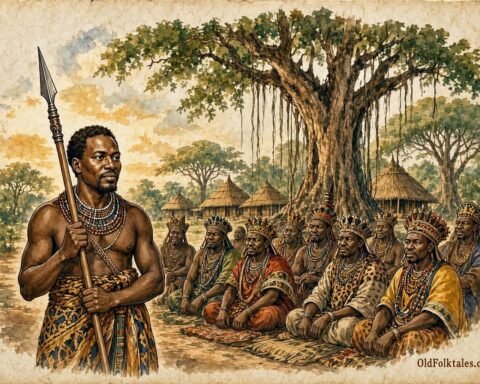
Nkongolo prepared his warriors for battle.
Yet as they assembled, many remembered the prince’s kindness and the king’s growing cruelty.
One by one, warriors lowered their spears.
Some laid their shields upon the ground.
Others stepped aside rather than fight against the people they had sworn to protect.
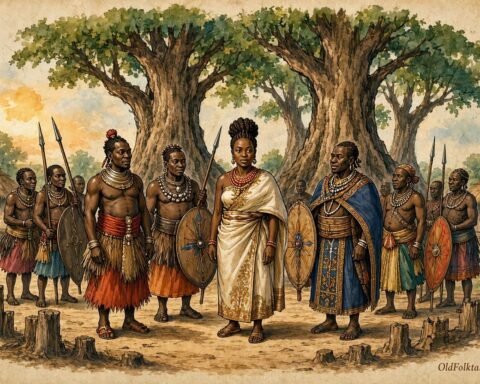
Seeing that violence would only bring greater suffering, the elders called for a great council beneath the sacred trees.
There, chiefs from every province spoke openly.
They described the heavy taxes, the broken trust, and the fear that had spread throughout the kingdom.
At last, the oldest elder turned to Nkongolo.
“A king’s greatest strength is not his army,” he said. “It is the confidence of his people. When that is lost, no throne can stand.”
Nkongolo looked around the gathering.
For the first time, he saw not enemies but disappointed faces.
He realized that his pride had driven away the very people whose loyalty had once made the kingdom strong.
The council declared that Nkongolo’s reign had come to an end.
Kalala Ilunga was chosen to guide the kingdom because he had earned the people’s trust through wisdom, fairness, and humility.
Kalala accepted the responsibility with a solemn promise.
“I will remember that a crown is not a reward for greatness. It is a duty to serve every family in the kingdom.”
Under his leadership, peace returned.
The chiefs were encouraged to speak honestly.
Trade flourished once again.
Farmers worked without fear, and justice reached villages throughout the land.
The story of Nkongolo the Red King was never forgotten.
The elders told it not to shame him but to remind every future ruler that power without justice cannot endure.
They taught that even the strongest king will lose his throne if he values fear above fairness and pride above wisdom.
And so, Nkongolo the Red King became one of the enduring royal legends of the Luba people, reminding every generation that true authority is sustained by justice, humility, and the trust of the people.
Keep reading: Discover more Central African folktales
Moral Lesson
This Luba folktale teaches that leadership founded on fear and pride will eventually fail. A ruler earns lasting respect by listening wisely, governing justly, and serving the people with humility.
Knowledge Check
1. Why did Nkongolo become an unjust ruler?
He allowed pride to replace wisdom and rejected the honest advice of his elders.
2. Why was Kalala Ilunga sent into exile?
Nkongolo wrongly feared that the prince wanted to take his throne.
3. What happened to the kingdom under Nkongolo’s rule?
Trade declined, fear spread, and the people’s trust in the king disappeared.
4. Why did many warriors refuse to fight Kalala?
They respected Kalala’s wisdom and did not want to defend injustice.
5. What made Kalala a worthy king?
He led with humility, fairness, wisdom, and a genuine desire to serve the people.
6. What is the central lesson of this folktale?
The story teaches that true leadership depends on justice, humility, and the trust of the people rather than fear and power.
Source: Adapted from Luba royal traditions discussed in Thomas Q. Reefe, The Rainbow and the Kings: A History of the Luba Empire (1981).