Long before organized kingdoms or centralized authority existed in the highlands of Bioko Island, the Bubi people lived in widely scattered settlements spread across steep mountains, dense forests, and mist-covered valleys. The land itself shaped their way of life. Narrow footpaths wound between villages, rivers cut through thick vegetation, and clouds often settled low over the highlands, making travel difficult and communication slow. Each settlement developed its own way of living, its own customs, and its own leadership system. Families depended on farming small plots of land, gathering forest resources, and fishing in nearby streams.
Although the Bubi people shared a common ancestry, the physical separation of their communities meant that over time, differences began to appear. Each village was led by its own council of elders, respected for wisdom and experience. These elders handled disputes within their communities, but there was no authority that connected all villages together. As long as resources were sufficient and seasons were favorable, this system worked without major conflict. However, when hardship appeared, the lack of unity became a serious challenge.
As generations passed, occasional disagreements arose between neighboring settlements. These disputes were often related to farmland boundaries, hunting territories, or access to water sources. Because there was no shared leadership system, each village defended its own interests independently. This sometimes led to misunderstandings that lasted for long periods. Without a central voice to mediate or encourage cooperation, small disagreements occasionally grew into larger divisions.
Want more? Read more West African folktales now
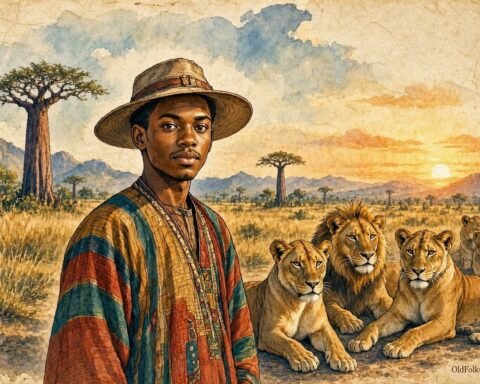
It was during such a period of quiet tension that a child named Moka was born in one of the smaller highland villages. His birth did not attract special attention, and nothing in his early life suggested that he would one day become a figure of importance. He was born into an ordinary family, one among many who depended on farming and forest resources for survival. However, from a young age, Moka displayed unusual qualities that set him apart.
While other children focused on games and competition, Moka preferred observing the world around him. He listened carefully to the conversations of elders and paid attention to how decisions were made. He observed how disagreements began, how emotions influenced judgment, and how some conflicts were resolved peacefully while others escalated unnecessarily. His quiet nature was often mistaken for simplicity, but those who knew him well recognized his deep thoughtfulness.
As Moka grew older, he began traveling between nearby villages to deliver messages or trade goods. These journeys exposed him to the diversity of the highland communities. He noticed that although the people shared similar values, their separation had created mistrust. In some villages, hospitality and cooperation were strong traditions. In others, fear of scarcity had led to suspicion and isolation. Moka began to understand that the problem was not hatred between people, but lack of communication and shared structure.
One particular season changed everything. The weather patterns in the highlands became unpredictable. Rainfall decreased in some areas while increasing in others. Crops that normally grew reliably began to fail. Rivers that once provided steady water supply weakened significantly. Hunting became more difficult as animals moved deeper into the forest in search of stable food sources. This environmental imbalance affected all villages, but not equally. Some communities struggled more than others, which created tension and accusations.
As food became scarce, villages began to focus on their own survival. Previously open paths between communities were restricted. Sharing of resources decreased significantly. Some groups accused others of taking more than their fair share of forest or farmland resources. Fear replaced trust, and isolation replaced cooperation. The fragile balance that had existed between the settlements began to break down.
Elders from different villages attempted to address the situation by organizing meetings. However, these gatherings were difficult to coordinate and often ended without resolution. Each group arrived with its own concerns and priorities. Some elders insisted that their village needed to protect its own resources first, while others argued that cooperation was necessary for survival. Without a unifying authority, discussions often turned into disagreement rather than solutions.
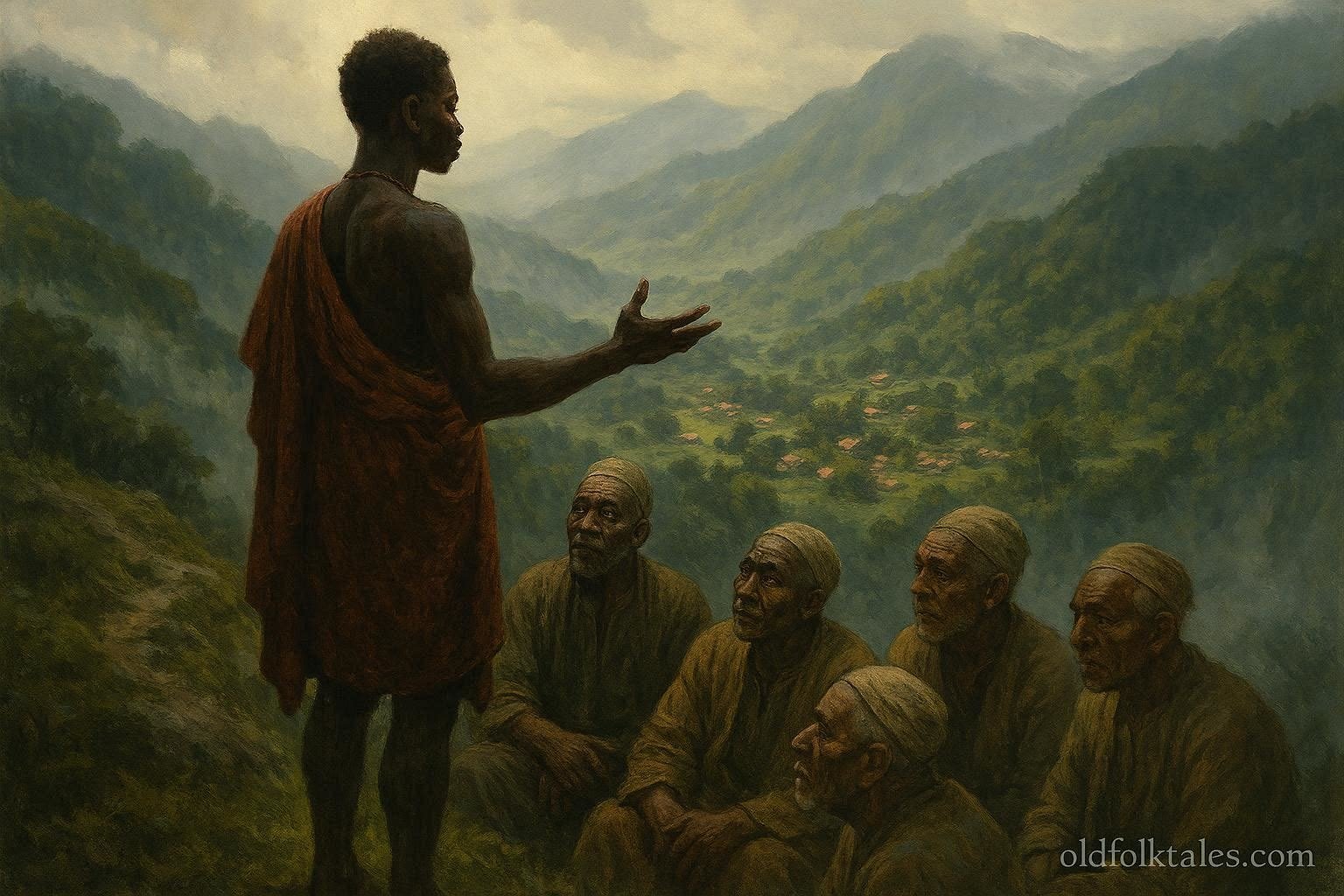
It was during one of these gatherings that Moka was invited to speak. His presence surprised many elders, as he was still young and not part of any formal leadership structure. However, those who had witnessed his ability to resolve local disputes encouraged him to share his thoughts. When he stood before the assembled leaders, he did not present himself as someone seeking authority. Instead, he showed respect to the elders and acknowledged the difficulty of their situation.
Moka spoke calmly, explaining what he had observed during his travels. He described how fear and isolation were increasing suffering for all villages. He reminded them that despite differences in location and custom, they were connected through shared ancestry and mutual dependence on the same land. He emphasized that survival in difficult times required cooperation rather than competition.
He proposed a system where villages could share resources more effectively. Instead of each community acting independently during hardship, they could coordinate distribution based on need. He suggested improved communication between settlements through trusted messengers, so that misunderstandings could be reduced. He also encouraged the creation of shared agreements regarding hunting and farming areas to prevent conflict.
At first, his ideas were met with caution. Some elders feared losing autonomy over their villages. Others questioned whether fairness could truly be maintained across different communities. Moka did not argue or insist. Instead, he continued visiting each village individually, listening carefully to concerns and adjusting his ideas based on what he learned. He treated every elder with respect, regardless of their position or opinion.
Over time, his patience began to change attitudes. People started to see that Moka was not seeking personal power. He was seeking stability for all communities. Gradually, small agreements were formed between neighboring villages. Shared storage systems for food were established in certain areas. Messengers were appointed to carry information between settlements. Conflicts that once lasted months were now resolved through dialogue.
As cooperation grew stronger, elders began discussing the idea of unified leadership. They realized that while each village could manage its internal affairs, there was a need for a coordinating figure who could ensure fairness and maintain unity across all communities. After long discussions and careful reflection, they reached a consensus that Moka should take on this responsibility.
When the decision was presented to him, Moka did not immediately accept. He asked whether the people truly agreed and whether they understood the responsibility involved. Only when he was assured that the decision reflected collective unity did he accept the role.
As a leader, Moka did not isolate himself from the people. He continued traveling between villages, listening to concerns, resolving disputes, and ensuring fairness in resource distribution. He never ruled through force or fear. Instead, he led through trust, dialogue, and service. His leadership helped stabilize the highland communities during a critical period.
Under his guidance, cooperation became stronger than division. Communication improved, disputes decreased, and shared identity among the villages became more pronounced. Over time, the scattered settlements began to see themselves as part of a larger unified community rather than isolated groups.
Even after his lifetime, Moka’s influence remained deeply embedded in oral tradition. Elders passed down stories of how a young man without wealth or military power united divided communities through wisdom and humility. His name became associated with the beginning of organized leadership among the Bubi people of Bioko Island.
His legacy endured as a reminder that true leadership is not about dominance or control, but about service, understanding, and unity. The story of Moka continued to be told across generations, especially during times when communities needed encouragement to remain united in the face of hardship.
If you liked this story, see our Central African folktales collection
Moral Lesson
True leadership is built on humility, patience, and the ability to unite people through service rather than power.
Knowledge Check
1. Who was Moka?
Moka was a young leader who united scattered Bubi communities on Bioko Island.
2. What challenges did the communities face?
They faced division, resource scarcity, and lack of centralized leadership.
3. How did Moka help solve the problem?
He encouraged cooperation, communication, and shared resource management.
4. Why was he chosen as leader?
Because he earned trust through fairness, patience, and service to all villages.
5. What leadership style did Moka use?
He led through dialogue, respect, and unity rather than force.
6. What is the main lesson of the story?
Leadership is about serving others and building unity, not seeking power.
Source
Adapted from Bubi oral historical traditions and founding leadership narratives preserved in Bioko Island ethnographic folklore archives.