The fertile hills surrounding Kpalimé in southwestern Togo have long been known for their rich farmland, flowing streams, and thriving artistic traditions. For centuries, the Ewe people living in this beautiful region transformed the gifts of nature into objects of lasting beauty. Among their most admired crafts was the production of indigo cloth, a tradition that combined careful observation, artistic creativity, and remarkable patience. Long before brightly colored factory fabrics filled market stalls, families produced deep blue textiles using natural indigo plants that grew in the region. Every stage of the process reflected generations of knowledge, from cultivating the plants to weaving the cotton and preparing the precious dye.
Within the Ewe communities of Kpalimé, indigo cloth represented much more than clothing. Beautifully dyed fabrics were worn during important ceremonies, celebrations, family gatherings, and special occasions. They were treasured gifts exchanged between relatives and respected friends. The rich blue color symbolized the dedication of the artisan whose hands had transformed simple cotton into something extraordinary. Elders often reminded young apprentices that every piece of cloth carried the reputation of the person who made it. Because of this, shortcuts were never admired, and careful workmanship was always praised.
Among the most respected artisans in Kpalimé lived a master dyer named Ama. Her workshop stood beside a clear stream shaded by towering mango and iroko trees where cool breezes made even the hottest afternoons pleasant. Visitors often stopped to admire rows of freshly dyed cloth hanging from wooden frames as they gently moved with the wind. The brilliant shades of blue seemed almost magical against the surrounding green hills.
Many young people dreamed of learning from Ama because her cloth was known throughout the region for its rich color and intricate patterns. Merchants traveled from distant towns hoping to purchase her textiles, while neighboring villages admired her commitment to preserving the ancient craft.
Continue your journey: Read more East African folktales
One rainy season, a curious young girl named Sena arrived at Ama’s workshop.
“I want to learn how to make cloth as beautiful as yours,” Sena said with excitement.
Ama smiled kindly before placing a woven basket into the girl’s hands.
“Then today we begin.”
Sena eagerly looked toward the large clay dyeing pots.
“Are we going to make blue cloth now?”
Ama gently shook her head.
“We begin by learning where the color comes from.”
Together they walked beyond the village toward fields where indigo plants flourished in the rich soil. Ama showed Sena how to recognize healthy leaves ready for harvesting. She explained that experienced dyers never stripped every leaf from a single plant because doing so weakened future harvests. Instead, they carefully picked only what was needed, allowing the plants to continue growing.
“Good artisans think about tomorrow as much as today,” Ama explained.
Sena carefully filled her basket while watching every movement of her teacher.
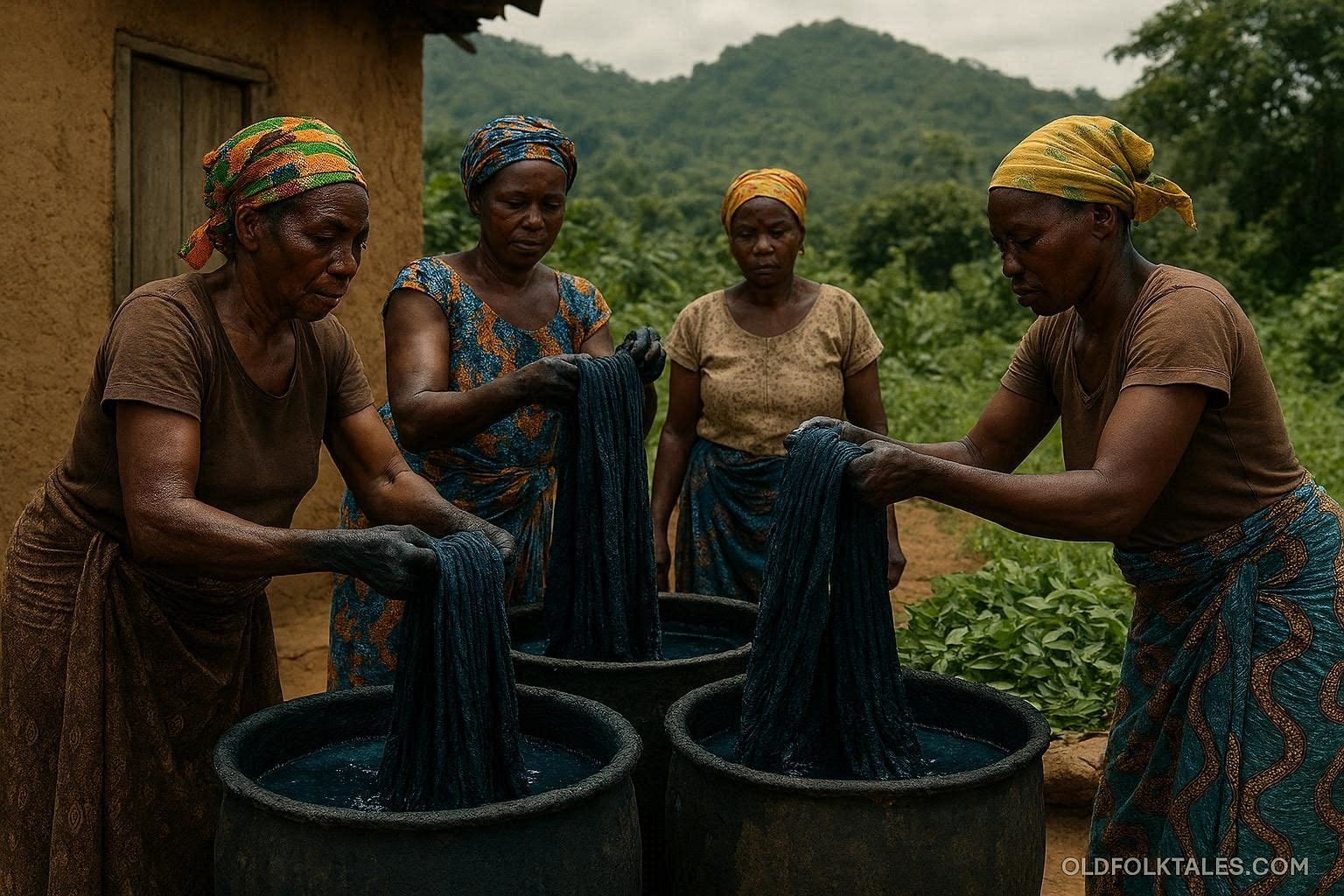
Back at the workshop, the freshly gathered leaves were placed inside large clay vessels filled with clean water. Ama explained that the leaves would remain there for several days while nature slowly released the precious pigments hidden inside them.
Sena looked disappointed.
“I thought we would finish today.”
Ama laughed softly.
“If beautiful cloth could be made in a single day, everyone would become a master.”
Each morning the apprentices stirred the mixture with long wooden paddles while Ama carefully examined the changing liquid. She watched its color, its texture, and even its scent.
One afternoon Sena asked how Ama always knew exactly when the dye was ready.
Ama dipped her fingers into the liquid before smiling.
“The plants tell us.”
Sena looked confused.
“They cannot speak.”
“They speak to those who learn to observe.”
As the weeks passed, Sena became more patient. She stopped asking how quickly each task could be finished and instead focused on completing every step correctly.
Once the dye reached the proper condition, the workshop became busier than ever. Freshly woven cotton cloth arrived from skilled local weavers. Ama spread each piece across a smooth wooden table before carefully folding and tying sections with strips of raffia.
Sena watched closely.
“Why are we tying the cloth?”
“Because every knot protects the cloth beneath it.”
After the cloth had been folded and secured, Ama slowly lowered it into the deep indigo dye.
Several minutes later she lifted it from the vat.
Sena frowned.
“It is green.”
“Keep watching.”
As fresh air touched the cloth, its color slowly changed.
Green became blue.
Blue deepened into a rich indigo unlike anything Sena had ever seen.
Her eyes widened with amazement.
“It changed all by itself.”
Ama smiled.
“Nature has finished the work we began.”
The cloth was allowed to dry before being dipped again. Each immersion strengthened the color. Some pieces required many careful immersions before reaching the deep shade that made Kpalimé textiles so highly valued.
When the raffia bindings were finally removed, beautiful patterns appeared across the fabric.
Circles.
Diamonds.
Flowing lines.
Stars.
Every design reflected the skill of the artisan who planned it before the cloth ever touched the dye.
Months passed, and Sena became one of Ama’s most dedicated apprentices. She learned how weather affected the dyeing process. She discovered that clean water produced brighter colors. She understood why every clay vessel had to be washed carefully before beginning another batch.
More importantly, she learned that patience created quality.
One market day, merchants from several neighboring towns arrived at the workshop. They admired the hanging textiles and offered generous prices for Ama’s finest work.
One wealthy trader approached her with an unusual request.
“I need twice as much cloth before next week’s market.”
“I will gladly pay extra.”
Ama thanked him politely.
Then she gently declined.
“The cloth will be ready when it is ready.”
The merchant looked surprised.
“Surely you can work faster.”
Ama smiled.
“I can work faster.”
“But I cannot hurry the plants.”
“I cannot hurry the dye.”
“And I cannot hurry generations of wisdom.”
The merchant nodded with respect.
He understood that true craftsmanship could never be measured by speed alone.
Years passed.
Ama grew older while Sena gradually became a skilled master in her own right. Before retiring from daily work, Ama invited Sena into the workshop one quiet morning.
She opened a small wooden chest and carefully removed an old stirring paddle polished smooth by many years of use.
“This belonged to my grandmother,” Ama said.
“She taught my mother.”
“My mother taught me.”
“Now it belongs to you.”
Sena accepted the paddle with both hands.
“I promise to honor the craft.”
Ama nodded.
“Do not simply teach people how to dye cloth.”
“Teach them why patience matters.”
Sena fulfilled that promise faithfully.
Her workshop soon welcomed new apprentices eager to learn the ancient traditions of Kpalimé. She never allowed anyone to skip important steps, even when modern methods seemed faster.
Instead, she reminded every student that beautiful cloth reflected careful hands, thoughtful minds, and respectful hearts.
As the years passed, visitors from across Togo and beyond came to admire the remarkable indigo textiles of Kpalimé. Many purchased the cloth because of its beauty, but they also left with a deeper appreciation for the generations of knowledge hidden within every thread.
Today, the indigo dyeing tradition of Kpalimé continues to represent the creativity and cultural heritage of the Ewe people. Although modern fabrics are widely available, skilled artisans still preserve traditional methods, demonstrating that patience and craftsmanship remain as valuable as they were centuries ago. Their work reminds every generation that lasting beauty is created not by rushing the process but by honoring the wisdom handed down through time.
The story of Indigo Hands of Kpalimé teaches that true mastery grows through patience, careful learning, and respect for the traditions entrusted to every new generation.
Click here to discover more legendary tales from West Africa
Moral Lesson
Patience, dedication, and respect for tradition transform ordinary materials into works of lasting beauty.
Knowledge Check
1. Why was indigo cloth important in Kpalimé?
It represented craftsmanship, cultural identity, and traditions passed down through generations.
2. What was the first lesson Ama taught Sena?
That beautiful cloth begins with respecting the indigo plants and learning the entire process.
3. Why did the cloth change from green to blue?
The dye reacted with the air, gradually turning the fabric into a rich indigo color.
4. Why did Ama refuse to rush the merchant’s order?
She believed true craftsmanship could not be hurried.
5. What gift did Ama give Sena before retiring?
A wooden stirring paddle that had belonged to her grandmother.
6. What is the main lesson of the story?
Great craftsmanship comes from patience, dedication, and preserving tradition.
Source
Adapted from the textile traditions of the Ewe communities of Kpalimé, with reference to Togolese textile heritage collections, Kpalimé cultural studies, and ethnographic research on traditional indigo dyeing in West Africa.