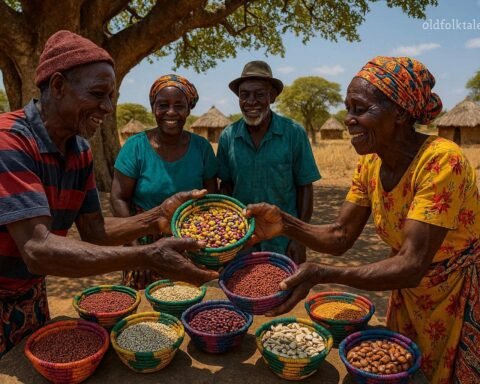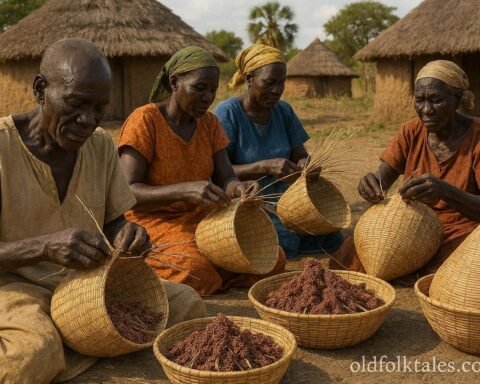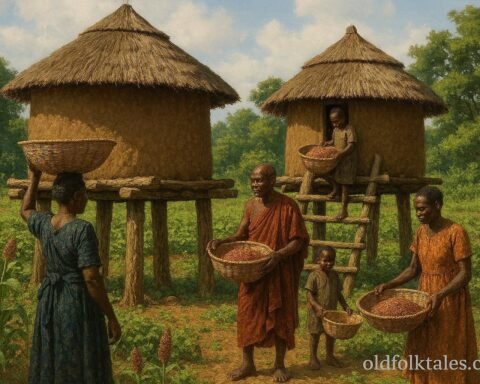
Every year, when the rainy season gave way to warm sunshine across the northern regions of Togo, the fields surrounding Kabye and Tem villages slowly transformed into waves of golden grain. Millet, sorghum, and other important crops stood ready for harvest after months of careful planting, weeding, and patient waiting. For farming families, this season marked the reward for countless days of labor. It was also a time when villages came together, not only to gather food but to celebrate the strength of community through music.
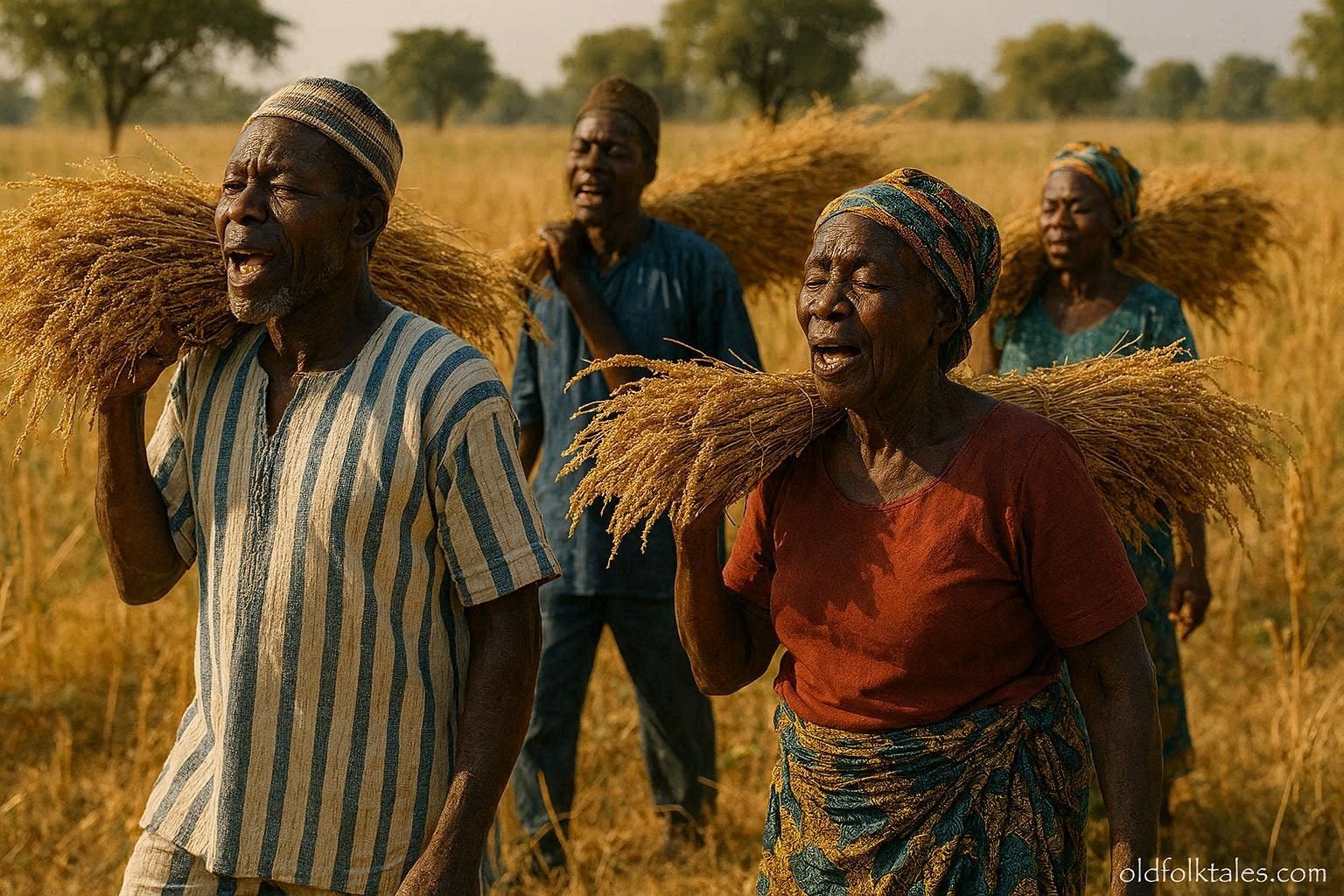
Long before radios and loudspeakers became common, the voices of the people filled the fields. Men and women worked side by side while singing traditional harvest songs that had been passed from one generation to another. These songs helped workers keep a steady rhythm as they cut grain, tied bundles into neat sheaves, and carried heavy harvests to storage. More importantly, the music reminded everyone that no family harvested alone. Every voice joined another until the fields echoed with melodies that carried hope, gratitude, and encouragement across the countryside.
In one Kabye village lived a hardworking boy named Kossi. He had helped his parents with farming since he was old enough to carry a small basket, but this year would be different. For the first time, he was considered old enough to join the adults as one of the sheaf bearers who gathered and carried the harvested grain.
The announcement filled him with excitement.
Don’t stop yet! See our complete East African folktales collection
His grandmother, Adjoa, smiled when she saw the eager look on his face.
“You are happy because you will carry grain,” she said.
Kossi nodded proudly.
“I want to work like everyone else.”
His grandmother laughed softly.
“Then you must also learn to sing.”
Kossi looked puzzled.
“I already know how to work.”
“But do you know how to work together?” she asked.
Before sunrise on the first day of harvest, the villagers gathered near the fields. The air was cool, and a gentle breeze moved across the tall grain. Elders offered words of gratitude for the successful growing season before everyone picked up their tools.
Just as the first stalks were cut, an elderly woman began to sing.
Her clear voice rose gently above the quiet field.
Within moments, another woman joined her.
Then the men answered with a different melody.
Soon every worker was singing.
The rhythm of the music matched the steady movement of sickles passing through the grain.
Kossi had expected loud celebration, but instead he heard calm, confident voices moving together like flowing water.
As he worked, he noticed something remarkable.
Nobody hurried.
Nobody tried to finish before everyone else.
The songs naturally kept every worker moving at the same pace.
Whenever someone grew tired, the voices around them seemed to provide fresh energy.
During a short rest, Kossi asked his grandmother why the songs were so important.
She picked up a handful of grain and smiled.
“Listen carefully tomorrow.”
The following morning, Kossi paid closer attention.
He noticed that some songs praised the farmers who had prepared the fields.
Others thanked the rain that had nourished the crops.
Some reminded children to respect the land that fed their families.
Others celebrated neighbors who always helped one another during difficult seasons.
Every song carried a lesson.
Every verse preserved a memory.
Every chorus connected the present generation with those who had worked the same land many years before.
Later that week, another village arrived to help with the harvest.
Their own fields had already been gathered, and now they willingly offered their labor to their neighbors.
The visitors brought different melodies, yet the messages remained the same.
Unity.
Gratitude.
Perseverance.
Soon both villages were singing together.
Although the melodies differed slightly, they blended beautifully across the fields.
Kossi smiled as he realized that cooperation could be heard as clearly as it could be seen.
One afternoon, dark clouds suddenly gathered over the hills.
Strong winds signaled that heavy rain might arrive before the day’s work was finished.
The village leader calmly encouraged everyone to continue harvesting.
Nobody panicked.
Instead, the singing grew stronger.
The steady rhythm helped workers organize themselves quickly.
Some people cut the remaining grain.
Others tied neat bundles.
The strongest sheaf bearers carried the harvest toward storage while younger children gathered loose stalks left behind.
By the time the rain began to fall, every bundle had been safely protected.
The villagers cheered together.
Not because they had worked faster.
Because they had worked together.
That evening, families gathered beneath a large baobab tree to share food prepared from earlier harvests.
The musicians brought traditional drums and rattles, but before the instruments began, the harvesters sang the same songs they had shared in the fields.
This time, however, the songs were slower.
Children listened carefully while elders explained the meaning behind each verse.
One song reminded everyone that selfishness weakens a community.
Another celebrated generosity toward widows and elderly neighbors during harvest time.
A third honored those who quietly served others without seeking recognition.
Kossi realized that the songs were not simply music.
They were lessons carried through melody instead of books.
Years passed, and Kossi became one of the strongest sheaf bearers in the village.
When younger children joined their first harvest, he patiently taught them exactly as his grandmother had taught him.
One eager boy asked,
“Why do we still sing these old songs?”
Kossi looked across the fields where families worked side by side.
“If we forget the songs,” he replied, “we may also forget why we harvest together.”
The boy thought quietly before joining the chorus with new confidence.
As seasons came and went, the voices of the harvesters continued to echo across the hills of northern Togo.
Modern farming tools gradually appeared.
Roads connected villages more easily.
New technologies changed many parts of daily life.
Yet the songs remained.
They reminded every generation that successful harvests depended not only upon fertile soil and favorable weather but also upon kindness, cooperation, and shared responsibility.
Today, traditional harvest songs continue to form an important part of the cultural heritage of the Kabye and Tem peoples. Ethnomusicologists have documented these songs as valuable expressions of agricultural life, preserving the history, values, and collective memory of farming communities across northern Togo. Their melodies continue to celebrate gratitude for the harvest while strengthening the bonds that unite families and neighbors.
The story of Songs of the Sheaf Bearers reminds us that work becomes lighter, communities become stronger, and traditions remain alive when people lift their voices together in gratitude and cooperation.
Click here to discover more legendary tales from West Africa
Moral Lesson
Working together with gratitude and encouragement helps communities achieve more than anyone could accomplish alone.
Knowledge Check
1. Why did the harvesters sing while working?
They sang to keep a steady rhythm, encourage one another, and preserve traditional lessons.
2. What did Kossi learn from his grandmother?
That working together is just as important as working hard.
3. What happened when rain threatened the harvest?
The villagers stayed united, organized themselves, and safely gathered the grain before the rain arrived.
4. What lessons were hidden in the harvest songs?
They taught gratitude, generosity, cooperation, and respect for the land and community.
5. Why did Kossi continue teaching the songs to younger children?
To preserve the traditions and values of the community.
6. What is the main lesson of the story?
Unity, gratitude, and cooperation help communities overcome challenges and succeed together.
Source
Adapted from the harvest traditions of the Kabye and Tem communities of northern Togo, with reference to Togolese ethnomusicology collections, agricultural folklore studies, and oral heritage research.