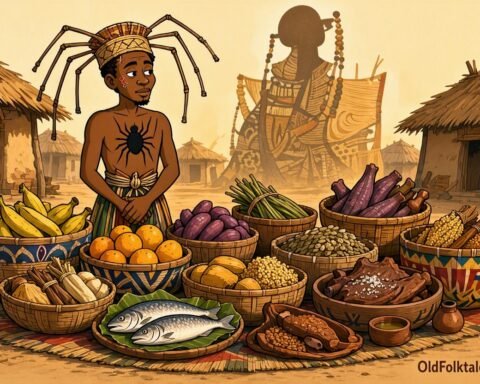
For countless generations, the Oti River has shaped the lives of the Moba and Gourma communities of northern Togo. Flowing across fertile plains before continuing its journey toward the Volta Basin, the river has provided water for families, nourished crops, supported fishing, and offered safe places where villages gathered to celebrate important moments throughout the year. Its steady current became woven into the rhythm of everyday life, reminding people that nature’s gifts should never be taken for granted.
The elders often told children that the Oti River was alive with stories. They spoke of river spirits not as frightening creatures to be feared but as symbols of the river’s wisdom and generosity. These stories reminded every generation that rivers deserved respect because they sustained both people and wildlife. The spirits represented the unseen balance that existed whenever humans harvested fish responsibly, protected the riverbanks, and left enough for future seasons. Through these traditions, children learned that greed harmed everyone, while gratitude ensured that the river would continue to provide for generations yet to come.
Among one riverside village lived a thoughtful boy named Yendu. His father was one of the community’s most respected fishermen, admired not because he always caught the most fish but because he understood the river better than anyone else. He knew where fish gathered during different seasons, recognized changes in the current, and carefully observed the birds whose movements often revealed where schools of fish could be found.
Yendu dreamed of becoming a fisherman just like his father. Every morning before sunrise, he eagerly followed him to the riverbank, carrying baskets, nets, and wooden paddles while the first light slowly spread across the calm water.
Continue your journey: Read more East African folktales
One cool morning, Yendu noticed that his father stopped before launching the canoe.
He quietly placed a small calabash of clean water back into the river.
Curious, Yendu asked, “Why do you pour water into a river that is already full?”
His father smiled.
“It is not because the river needs my water.”
“It is because I wish to remember that everything we receive is a gift.”
Yendu thought carefully about those words as they pushed the canoe into the gentle current.
The river was peaceful.
Kingfishers skimmed across the surface.
Herons stood silently along the reeds.
Small fish leaped above the water before disappearing again beneath the ripples.
His father pointed toward the birds.
“They are fishing too.”
Yendu nodded.
“They are faster than we are.”
His father laughed softly.
“They also know when enough is enough.”
The canoe drifted toward a quiet bend where fish were plentiful.
Yendu eagerly prepared to cast the net.
Before he could throw it, his father gently stopped him.
“Look carefully.”
Yendu peered into the clear water.
Tiny young fish swam close to the reeds.
“They are too small,” he said.
His father nodded.
“If we catch them today, what will we catch next year?”
Together they paddled farther downstream until they reached deeper water where mature fish gathered.
Only then did they cast their net.
Their catch was modest but more than enough for the family’s needs.
As they returned home, Yendu noticed another fisherman loading every fish he caught into his canoe, regardless of its size.
That evening, Yendu asked his grandmother about it.
She smiled gently before telling him one of the village’s oldest stories.
“Our ancestors spoke of the river spirits because they wanted people to remember that the river watches how we treat it.”
“If someone takes more than they need, the spirit of greed grows stronger than the spirit of gratitude.”
“The river may still flow, but its blessings slowly disappear.”
The next morning, Yendu shared the story with his father.
His father nodded in agreement.
“The spirits remind us to respect the balance of nature.”
“They teach wisdom through stories.”
Weeks later, the village prepared for its annual fishing festival.
Families cleaned their canoes.
Children decorated paddles with colorful designs.
Women prepared traditional meals using grain, vegetables, and fish from earlier catches.
Before the celebration began, the village elder gathered everyone beside the river.
He thanked the Creator for the flowing water, the fish, the fertile land, and the unity of the community.
He reminded everyone that the river belonged not only to those living today but also to the generations who would depend upon it tomorrow.
His words remained with Yendu throughout the festival.
Several days later, heavy rains upstream caused the river to rise quickly.
Floating branches and fast currents made fishing dangerous.
Some impatient fishermen wanted to continue anyway.
Yendu’s father advised waiting until the waters became calm again.
“The river is telling us to rest,” he said.
Although some complained, most families agreed.
They spent the following days repairing nets, mending canoes, and teaching children traditional knot tying instead of risking their safety.
When the waters finally settled, the fish returned in abundance.
Everyone realized that patience had protected both lives and the river itself.
As the years passed, Yendu grew into a skilled fisherman.
Like his father, he learned to recognize the changing seasons, respect breeding areas, and avoid wasting what the river provided.
He also became a gifted storyteller.
Whenever children accompanied him on the river, he shared the old stories of the river spirits.
Some children asked whether the spirits truly lived beneath the water.
Yendu smiled before answering.
“The stories are true because they teach us how to care for the river.”
“If we remember their lessons, the river will continue to care for us.”
The children understood.
The stories were never simply about invisible beings.
They were about responsibility.
Respect.
Balance.
Gratitude.
Years later, visitors came from distant places to learn about the traditions of the Oti River communities.
Many admired the beautiful river and the rich wildlife that continued to thrive there.
They also admired the wisdom preserved through generations of oral tradition.
The elders explained that protecting nature began with teaching children to value every gift the river offered.
Today, the Oti River remains an essential part of the cultural and environmental heritage of northern Togo. Oral traditions of the Moba and Gourma peoples continue to emphasize responsible fishing, respect for wildlife, and careful stewardship of the river’s resources. These stories remind both young and old that healthy rivers sustain communities only when people protect the delicate balance of nature.
The story of River Spirits of the Oti teaches that gratitude, restraint, and respect for the natural world ensure that its blessings will continue to flow for generations to come.
Click here to discover more legendary tales from West Africa
Moral Lesson
Nature provides generously when people use its resources wisely and protect them for future generations.
Knowledge Check
1. Why did Yendu’s father pour water back into the river?
To express gratitude and remember that the river’s gifts should never be taken for granted.
2. Why did they avoid catching the small fish?
To allow them to grow and ensure future fish populations.
3. What did the stories of the river spirits teach?
They taught respect for nature, gratitude, and responsible use of the river’s resources.
4. Why did the villagers stop fishing during the floods?
To protect their safety and allow the river to return to its natural balance.
5. What did Yendu teach the children when he became a fisherman?
He taught them the traditional stories and the importance of caring for the river.
6. What is the main lesson of the story?
Responsible stewardship and gratitude help preserve nature for future generations.
Source
Adapted from the oral traditions of the Moba and Gourma communities of northern Togo, with reference to Oti River cultural studies, Togolese environmental heritage archives, and regional ethnographic research.