In the early traditions of the Buganda Kingdom, few rulers are remembered with as much respect as Kabaka Kimera. Oral histories describe him as a leader who helped strengthen the kingdom during a formative period and established standards of governance that influenced generations of rulers who followed. His reputation rested not only on political achievements but also on his ability to administer justice fairly.
One story preserved in Buganda tradition tells of a difficult dispute that challenged Kimera’s judgment and forced him to choose between personal loyalty and public responsibility.
During Kimera’s reign, the kingdom enjoyed a period of relative stability. Farmers cultivated fertile lands near lakes and rivers. Traders traveled between settlements carrying goods and information. Clans cooperated through established customs, while elders helped resolve disagreements before they became serious conflicts.
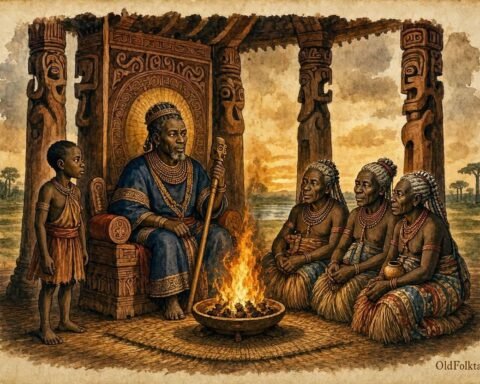
At the center of this growing kingdom stood the royal court.
Each week, people traveled to the capital seeking guidance, protection, or justice. Some came to settle disputes over land. Others sought judgments concerning livestock, trade agreements, or family matters. The court served as a place where ordinary people could present concerns before leaders entrusted with maintaining order.
Kabaka Kimera took these responsibilities seriously.
Want more? Read more West African folktales now
Rather than delegating every case to advisors, he often listened personally when important disputes arose. He believed that justice required careful attention and that a ruler should understand the concerns of the people.
One season, a dispute emerged that quickly attracted attention throughout the kingdom.
The conflict involved two respected men.
The first was Mugerwa, a successful cattle owner whose family had lived in the region for generations. The second was Sebugulu, a trusted royal official who had served the kingdom faithfully for many years and was known personally to the Kabaka.
The disagreement concerned a valuable piece of land located near a river.
The land was especially important because it contained fertile soil and reliable access to water. Both men claimed rightful ownership.
Mugerwa insisted that the land had belonged to his family for decades and that witnesses could confirm his claim.
Sebugulu argued that the property had been granted to him as recognition for years of service to the kingdom.
At first, local elders attempted to resolve the matter.
They listened to both sides and reviewed available evidence. Yet the dispute proved unusually complicated. Witnesses disagreed. Memories differed. Documents were scarce.
Unable to reach a final decision, the elders referred the case to the royal court.
News spread rapidly.
Many people assumed the outcome was already known.
Sebugulu enjoyed the confidence of the Kabaka and had served the kingdom faithfully for years. Some believed his relationship with the ruler would guarantee victory.
Others worried that public trust in the court would suffer if favoritism influenced the decision.
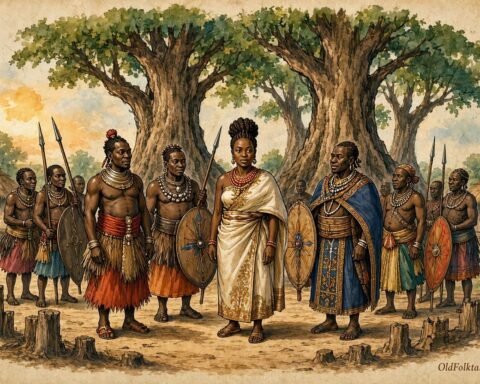
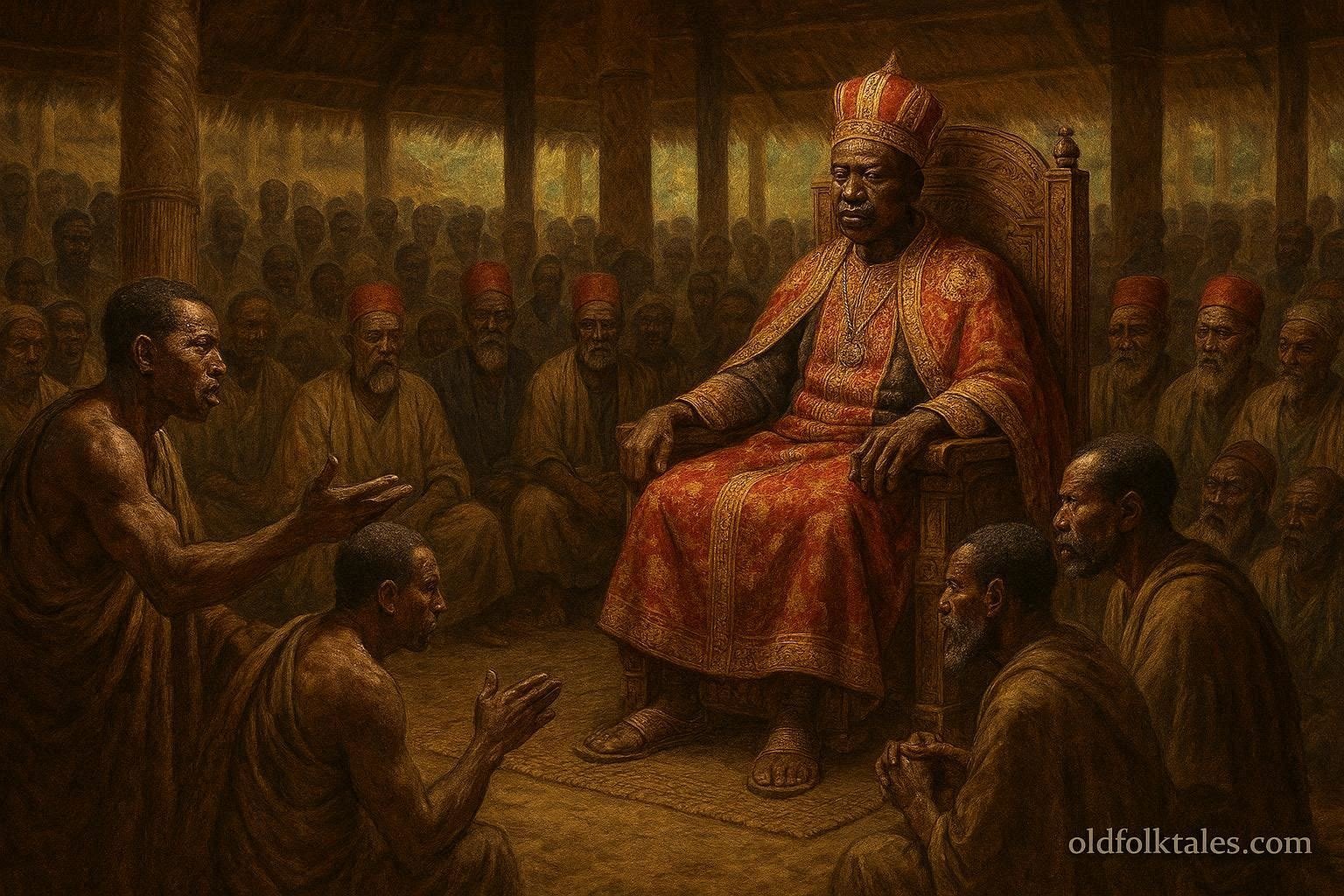
When the hearing began, the royal court filled with spectators.
Clan leaders, elders, traders, and ordinary villagers gathered to observe the proceedings. Everyone understood that the judgment would affect more than a single land dispute. It would reveal how justice operated within the kingdom.
Kabaka Kimera entered the court and listened carefully as both men presented their arguments.
Mugerwa described his family’s long connection to the land.
He called witnesses who testified that his ancestors had cultivated the area for many years.
Sebugulu then presented his case.
He explained his service to the kingdom and described circumstances under which he believed the land had been granted to him.
For several hours, evidence was reviewed.
Questions were asked.
Witnesses were examined.
Advisors offered observations.
Yet the decision remained difficult.
That evening, after the court adjourned, Kimera met privately with senior counselors.
Some argued that preserving loyalty among royal officials should be a priority.
Others warned that granting special treatment would weaken confidence in the kingdom’s institutions.
The Kabaka listened without revealing his opinion.
Later, alone in his residence, he reflected upon the situation.
He respected Sebugulu and appreciated his years of service.
At the same time, he understood that justice could not depend on personal relationships.
If rulers favored friends over evidence, public trust would eventually disappear.
The following morning, the court reconvened.
Crowds gathered once again.
Everyone sensed that an important decision was about to be announced.
Kabaka Kimera stood before the assembly and addressed the people.
He explained that leadership carries responsibilities greater than personal preference. A ruler must consider the interests of the entire kingdom rather than the desires of individuals, no matter how respected those individuals may be.
He then reviewed the evidence presented during the hearing.
After careful consideration, he concluded that Mugerwa’s claim was stronger.
Witness testimony and community memory supported his family’s ownership of the land.
The property would therefore remain with Mugerwa.
A hush spread across the gathering.
Many had expected a different outcome.
Sebugulu himself appeared disappointed, but he remained respectful.
Kimera then did something that further impressed those present.
He publicly praised Sebugulu for accepting the judgment peacefully despite the personal cost. He explained that loyalty to the kingdom includes respecting the rule of law even when decisions are unfavorable.
The response transformed what could have been a divisive moment into a lesson for the entire community.
People saw that neither status nor personal connections guaranteed special treatment.
They also saw that honorable conduct involves accepting fair decisions with dignity.
The story of the judgment spread throughout Buganda.
Travelers carried news of the case to distant settlements.
Elders discussed it during community gatherings.
Parents shared it with their children as an example of ethical leadership.
Over time, the event became part of the oral traditions associated with Kabaka Kimera.
Whether every detail occurred exactly as remembered mattered less than the values preserved within the narrative.
The story emphasized principles that remained important across generations.
Justice must be impartial.
Leaders must place public responsibility above personal loyalty.
Trust is earned through fairness and consistency.
Years later, Kimera’s reign continued to be remembered as a period when institutions were strengthened and confidence in leadership increased.
His handling of the dispute became one of the examples used to explain why he earned lasting respect among the Baganda.
The narrative also served as guidance for future rulers.
Every generation faces situations where loyalty, friendship, and personal interests come into conflict with duty.
The challenge is deciding which values should prevail.
According to the tradition, Kimera’s answer was clear.
A leader’s first obligation is to justice.
Without justice, authority loses legitimacy.
Without fairness, unity becomes fragile.
Without integrity, even the strongest kingdom cannot endure.
Today, stories about Kabaka Kimera remain part of Buganda’s rich oral heritage.
They continue to inspire discussions about leadership, governance, and ethical responsibility.
The judgment he delivered is remembered not because it involved a piece of land but because it demonstrated the principles that allow communities to thrive.
For generations, the story has reminded listeners that true leadership is measured not by power but by the courage to make fair decisions when fairness is most difficult.
Looking for more? Explore the magic of East African folktales here
Moral Lesson
True leaders uphold justice even when personal loyalty makes doing so difficult.
Knowledge Check
1. Who was Kabaka Kimera?
A respected ruler in Buganda oral traditions known for wisdom and fair leadership.
2. What caused the dispute in the story?
A disagreement over ownership of valuable land near a river.
3. Who were the two men involved?
Mugerwa, a cattle owner, and Sebugulu, a royal official.
4. Why was the case difficult for Kimera?
Because one of the claimants was a trusted official personally known to him.
5. What decision did Kimera make?
He ruled in favor of Mugerwa because the evidence supported his claim.
6. What is the main lesson of the story?
Justice should be based on fairness and evidence rather than personal relationships.
Source
Adapted from Buganda royal traditions, narratives associated with Kabaka Kimera, and materials preserved in Buganda historical oral tradition archives.