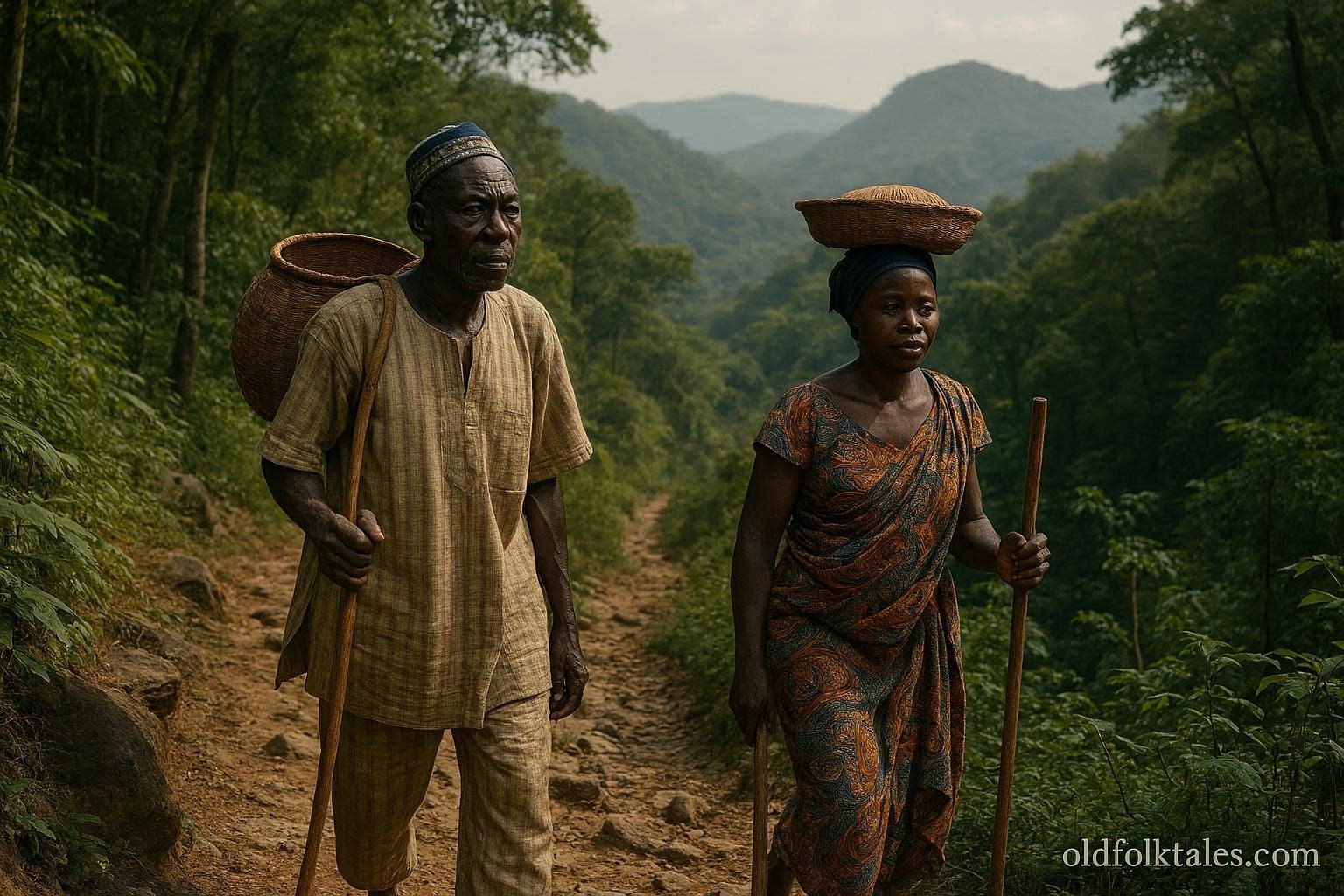
Rising across central Togo, the Fazao Mountains have long formed a landscape of rolling hills, dense forests, rocky slopes, and winding valleys. Long before paved roads connected towns and villages, the people of the Tem and Ifè communities relied on a remarkable network of narrow footpaths that crossed the mountains. These ancient trails were more than routes from one place to another. They carried traders bringing goods to market, farmers visiting neighboring villages, families attending weddings and festivals, healers answering urgent calls, and messengers delivering important news.
Every bend in the path held a story. Every steep climb reminded travelers of those who had walked before them. Elders taught that the mountain trails were never meant to be crossed alone in spirit, even when a person traveled by themselves. Along the paths, strangers greeted one another, burdens were shared, and anyone in need could expect a helping hand. These customs transformed difficult journeys into opportunities to strengthen friendships and build trust between neighboring communities.
In one Tem village at the foot of the mountains lived a young boy named Kafui. Ever since he was little, he had watched long lines of travelers disappear into the forests each morning before returning at sunset with baskets of yams, woven cloth, pottery, medicinal herbs, and stories gathered from distant villages.
Kafui dreamed of making the journey himself.
Whenever he asked his grandfather, Tenga, about the mountain paths, the old man smiled.
Keep reading: Discover more Central African folktales
“One day you will cross Fazao,” he would say.
“But first you must understand that the mountain teaches every traveler.”
Kafui often wondered what lessons a mountain could possibly teach.
One cool morning at the beginning of the dry season, Tenga finally invited him to join a group traveling to an Ifè village beyond the highest ridge.
Before sunrise, the travelers gathered beneath a large baobab tree carrying baskets, walking staffs, gourds of water, and simple meals wrapped in leaves.
No one hurried.
The elders carefully checked that everyone had enough food and water before beginning the climb.
As the first rays of sunlight reached the hills, the group entered the forest.
Birdsong echoed through the trees while cool mist drifted between the branches.
The narrow footpath climbed steadily over smooth stones and winding roots.
At first, Kafui walked quickly, eager to prove his strength.
Soon he found himself breathing heavily.
His grandfather smiled.
“The mountain is patient.”
“You should be patient too.”
Kafui slowed his pace.
Before long, he realized that everyone in the group walked at nearly the same steady rhythm.
Nobody rushed ahead.
Nobody was left behind.
As they continued climbing, they met an elderly woman carrying a basket of firewood.
Without being asked, two young men stepped forward and helped carry her load through the steepest section of the trail.
When they reached easier ground, she thanked them warmly before continuing on her way.
Kafui looked at his grandfather.
“They did not even know her.”
Tenga nodded.
“The path belongs to everyone.”
“If we help only our relatives, the mountain would become a lonely place.”
Later that morning, the travelers reached a narrow stream flowing across the trail.
Large stepping stones crossed the water, but recent rains had made them slippery.
One by one, each traveler crossed carefully.
When Kafui hesitated, an Ifè merchant standing on the opposite side stretched out his hand.
“Come,” he said with a smile.
“We all cross together.”
Kafui accepted the helping hand and safely reached the other side.
Although they had never met before, he already felt as though they were friends.
As the sun climbed higher, the group stopped beneath tall trees to rest.
People shared roasted yams, dried fruit, and cool water.
Stories soon followed.
One traveler described seeing rare birds near the mountain cliffs.
Another spoke about new farming methods learned from neighboring villages.
A healer explained which forest plants were useful for treating fever.
Kafui listened carefully.
He realized that the mountain paths carried knowledge just as surely as they carried people.
In the afternoon, dark clouds gathered unexpectedly above the peaks.
A heavy rainstorm swept across the mountains.
The narrow trail quickly became muddy, making each step more difficult.
One young trader slipped and twisted his ankle.
Without hesitation, everyone stopped.
Some cut strong branches to make a walking support.
Others divided the trader’s heavy load among themselves.
The journey continued more slowly, but no one complained.
When Kafui asked why they did not leave the injured traveler behind to return later, his grandfather looked surprised.
“A traveler who walks alone today may be the one who helps us tomorrow.”
“The mountain remembers how we treat one another.”
By evening, the group finally reached the Ifè village.
The villagers welcomed them warmly with food, fresh water, and places to rest.
Although they came from different communities, the greetings felt like those exchanged between old friends.
The following day, Kafui watched merchants exchange goods fairly while elders discussed farming, family celebrations, and preparations for the coming planting season.
Children from both villages played together without caring which community they belonged to.
He began to understand that the mountain paths connected much more than villages.
They connected people.
On the return journey, Kafui no longer hurried ahead.
Instead, he watched carefully for anyone who might need assistance.
When he noticed a younger child struggling with a heavy basket, he quietly offered to carry part of the load.
The child’s grateful smile reminded him of the helping hand he had received while crossing the stream.
Years passed.
Kafui became one of the most experienced guides along the Fazao footpaths.
He knew every rocky climb, every shaded resting place, and every stream crossing.
More importantly, he preserved the customs that made the journeys safe and welcoming.
Whenever young travelers joined their first crossing, he reminded them that strength alone would never make someone a respected guide.
“A good traveler reaches the destination,” he often said.
“A great traveler helps others arrive as well.”
As roads gradually reached more parts of central Togo, fewer people depended entirely upon the ancient mountain trails.
Yet the old footpaths remained important to many villages, hikers, farmers, and cultural guides who continued to value their history.
Elders still gathered children to tell stories about the crossings of earlier generations.
The lessons remained unchanged.
Walk with patience.
Share what you have.
Help those who struggle.
Respect every traveler.
Today, the Fazao region continues to preserve both its remarkable natural beauty and the cultural traditions of the Tem and Ifè peoples. Heritage studies and ethnographic research document how the ancient mountain pathways fostered cooperation, trade, communication, and lasting friendships between neighboring communities long before modern transportation. These stories continue to remind future generations that the greatest journeys are measured not only by the distance traveled but also by the kindness shown along the way.
The story of The Crossing at Fazao teaches that true strength is found in people who walk together, share their burdens, and never leave another traveler behind.
If you enjoyed this story, explore our full West African folktales collection
Moral Lesson
Helping others along life’s journey makes every community stronger and every destination more meaningful.
Knowledge Check
1. Why were the mountain paths of Fazao important?
They connected villages for trade, communication, family visits, and cooperation.
2. What did Kafui learn about traveling through the mountains?
That patience and teamwork were more important than speed.
3. How did the travelers help the elderly woman?
They carried her firewood through the steepest part of the trail.
4. What happened after the young trader injured his ankle?
The group shared his load and helped him continue the journey safely.
5. What lesson did Kafui teach after becoming a guide?
That a great traveler helps others reach their destination.
6. What is the main lesson of the story?
Communities become stronger when people support one another with kindness and cooperation.
Source
Adapted from the oral traditions of the Tem and Ifè communities of central Togo, with reference to Fazao Malfakassa heritage studies, Togolese ethnographic archives, and regional cultural history research.