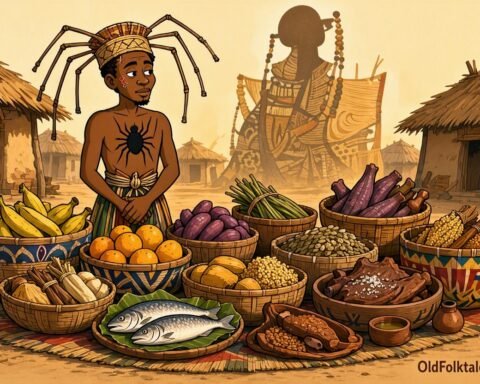
The Sudd wetlands stretch across the heart of South Sudan like a living world of winding rivers, quiet lagoons, floating vegetation, tall papyrus reeds, and open waterways that seem to change with every season. As one of the largest freshwater wetlands on Earth, the Sudd has supported countless generations of people, birds, fish, and wildlife whose lives are closely connected to the rhythm of its waters. For the Nuer and Shilluk communities who have lived around these wetlands for centuries, the Sudd has always been more than a place to catch fish. It is a source of life, a teacher of patience, and a reminder that nature rewards those who respect its balance. Long before modern equipment reached the region, families relied upon knowledge carefully preserved through observation, experience, and oral tradition. Every fishing season became another opportunity to pass this wisdom from elders to children, ensuring that both the people and the wetlands could continue to thrive together.
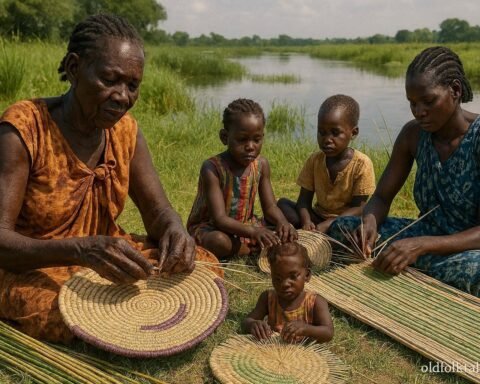
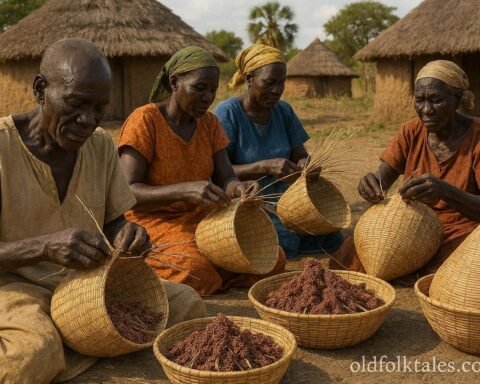
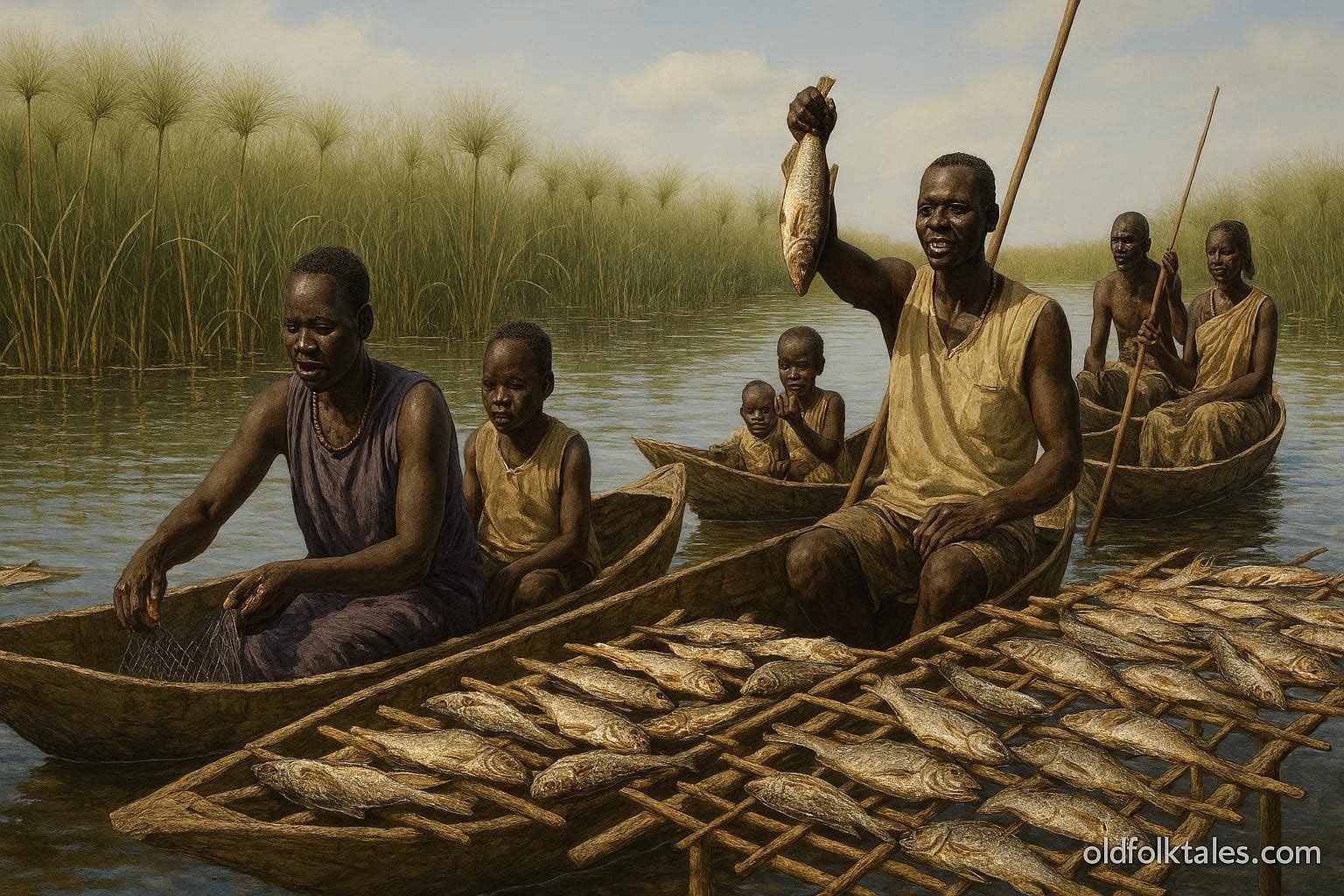
Each year, as the water levels shifted with the changing seasons, families prepared to establish temporary fishing camps along quiet channels, sheltered lagoons, and productive riverbanks. These camps became lively communities where work, learning, and family life blended naturally. Shelters built from reeds, grass, poles, and woven mats stood beside carefully pulled canoes while drying racks held fish prepared for future meals. Children learned by watching their parents repair fishing nets, weave reed traps, carve wooden paddles, and study the movements of birds and water. Every activity carried a lesson because the elders believed that successful fishing depended not only upon skill but also upon careful observation, patience, cooperation, and gratitude.
Among one Shilluk family lived a thoughtful boy named Deng. Every year he eagerly awaited the journey from his home to the seasonal fishing camp where his parents, grandparents, aunts, uncles, and cousins would spend many weeks together beside the wetlands.
Long before sunrise on the morning of their departure, the entire family prepared their canoe.
Keep reading: Discover more Central African folktales
His father inspected each fishing net for small tears.
His mother packed dried grain, clay cooking pots, woven baskets, and carefully folded sleeping mats.
His grandmother carried bundles of smoked fish from the previous season to feed the family until fresh catches became plentiful.
Deng noticed that everyone worked calmly.
Nobody hurried.
Every item had its proper place.
As they pushed the canoe gently into the quiet water, his grandfather smiled.
“The journey begins before the paddle touches the river.”
Deng looked puzzled.
“What do you mean?”
His grandfather dipped the paddle slowly into the water.
“A good fisherman prepares before the fish arrive.”
Those words remained in Deng’s thoughts as the canoe glided through narrow waterways bordered by tall papyrus reeds.
The morning air was cool.
White birds lifted gracefully into the sky as the canoe approached.
Small fish disturbed the calm surface with gentle splashes.
Everything seemed peaceful.
After many hours of travel, the family reached their fishing camp where several neighboring families had already arrived.
Children greeted one another with laughter.
Older men repaired canoes beneath broad shade trees.
Women arranged cooking places while younger boys gathered dry branches for evening fires.
The camp quickly became alive with activity.
Although each family had its own shelter, everyone worked together whenever help was needed.
That evening, before the first fishing expedition began, the oldest fisherman gathered everyone together.
He looked across the calm water before speaking.
“The Sudd feeds every family.”
“It asks only one thing in return.”
“Respect.”
The children listened carefully.
“We take what we need.”
“We leave enough for tomorrow.”
“We protect the waters because they protect us.”
Early the following morning, Deng accompanied his father and grandfather to inspect the first fishing nets.
Mist drifted quietly across the lagoon.
The only sounds came from distant birds and the gentle movement of paddles through the water.
Deng wanted to lower the nets immediately.
His grandfather raised a hand.
“Watch first.”
Together they remained silent.
Several birds suddenly circled above one section of the lagoon.
Small ripples spread through the floating grasses.
His grandfather smiled.
“The river has spoken.”
Deng looked carefully.
“I cannot hear anything.”
“You hear with your eyes before your ears,” his grandfather replied.
“The birds know where the fish are feeding.”
They paddled quietly toward the area.
Without disturbing the water, they lowered their net.
Then they waited.
Deng grew restless.
Minutes seemed like hours.
Finally his father whispered,
“Now.”
Together they slowly lifted the net.
It shimmered with healthy fish.
Deng’s face filled with excitement.
His grandfather laughed softly.
“The river rewards those who know how to wait.”
When they returned to camp, every family shared part of the morning’s catch.
Some fish were prepared immediately for breakfast.
Others were carefully cleaned before being placed upon wooden drying racks beside slow smoking fires.
Nothing was wasted.
The heads, bones, and smaller fish all found useful purposes within the community.
Deng noticed that even the youngest children helped carry baskets, gather firewood, or fetch clean water.
Every task mattered.
Later that afternoon, his grandmother sat beneath a large tree surrounded by several children.
She began telling one of the oldest stories remembered within their family.
It spoke of a fisherman who believed the wetlands belonged only to him.
Each day he caught more fish than his family could eat.
He ignored the advice of the elders and filled basket after basket simply because he could.
Soon the nearby waters became quiet.
The birds disappeared.
The fish moved elsewhere.
When the fisherman finally realized his mistake, he returned to the elders asking how the river could become generous again.
“The wetlands remember how people treat them,” the oldest elder answered.
“You must learn to take only what you truly need.”
The children listened without speaking.
When the story ended, Deng understood that fishing was not a contest to see who could catch the most.
It was a partnership between people and nature.
Several days later, strong winds swept across the wetlands.
Heavy rain followed throughout the night.
Many fishing nets became tangled among floating vegetation.
At sunrise, every family worked together.
Some untangled the damaged nets.
Others repaired broken ropes.
Experienced fishermen patiently taught younger people how to strengthen weak knots so they would last throughout the season.
Nobody complained about helping another family because everyone knew that cooperation kept the entire camp strong.
As the days passed, Deng became more confident.
He learned how to paddle quietly through narrow channels without disturbing the fish.
He discovered how changing water levels influenced where different species gathered.
His grandfather also showed him how to recognize places where young fish were growing.
Those areas were always left undisturbed.
“These fish belong to tomorrow,” he explained.
“If we catch them today, tomorrow becomes poorer.”
Deng nodded with understanding, realizing that wisdom often meant choosing not to take everything that was available.
He began noticing that the elders always observed the wetlands before making any decision. They watched the direction of the current, the color of the water, the flowering reeds, and the arrival of migratory birds. Every change revealed something about the season ahead.
One morning, Deng and several other young people prepared their nets before the older fishermen had finished their observations.
Excited to prove themselves, they paddled toward a familiar fishing ground.
The water looked calm.
The reeds moved gently in the breeze.
Everything appeared perfect.
When they returned several hours later, their baskets held only a few small fish.
The older fishermen smiled kindly instead of criticizing them.
One elder pointed toward another channel where large flocks of water birds had gathered.
“The fish moved during the night,” he explained.
“The birds told us.”
Deng realized that experience came from paying attention every day, not from rushing ahead.
From that moment onward, he watched the wetlands more carefully than ever before.
As the season continued, the camp welcomed visitors from nearby fishing communities.
News traveled quickly across the waterways.
Families exchanged greetings, shared meals, repaired one another’s canoes, and discussed changing water levels.
Some visitors brought finely woven baskets.
Others traded smoked fish for grain, clay pots, or handmade tools.
The exchanges strengthened friendships that had existed for many generations.
No visitor left the camp without receiving food and a place to rest.
Hospitality was considered just as important as successful fishing.
One evening, Deng sat beside his grandmother while she prepared fish for smoking.
He watched her arrange each fish carefully above the slow fire.
She never allowed the flames to burn too strongly.
She turned every fish at just the right moment.
Curious, Deng asked,
“Why do you spend so much time preparing them?”
His grandmother smiled.
“A fish that feeds us today is a blessing.”
“A fish prepared well feeds us tomorrow.”
She explained that properly smoked fish could be stored for many weeks and carried safely during long journeys.
Careful preparation meant that families remained secure even when storms or changing seasons made fishing difficult.
Deng understood that preserving food required the same patience as catching it.
Several weeks later, the camp experienced one of its greatest challenges.
A violent storm swept across the wetlands before dawn.
Strong winds bent the tall papyrus reeds.
Heavy rain filled the narrow channels.
Several canoes broke loose from their moorings and drifted into the flooded marshes.
When the storm finally passed, the fishermen gathered without hesitation.
Nobody searched only for their own canoe.
Instead, every family joined the effort.
Some paddled through flooded channels looking for drifting boats.
Others repaired damaged nets.
Young people collected scattered paddles and baskets carried away by the rising water.
By sunset, every missing canoe had been recovered.
The camp had suffered damage, but no family had been left alone.
That evening, the oldest elder addressed everyone gathered around the fire.
“The storm reminded us that the wetlands belong to no single person.”
“We survive because we help one another.”
His words were greeted with quiet agreement.
Deng looked around the circle.
He saw tired faces.
He also saw smiles.
Everyone had worked together.
Everyone had shared the burden.
As the fishing season drew toward its end, preparations began for the journey home.
The drying racks held enough smoked fish to supply every household for many weeks.
Fishing nets were washed, repaired, and folded carefully.
The temporary shelters were dismantled.
Nothing useful was abandoned.
The elders insisted that the camp should be left clean so that it would welcome future generations just as generously as it had welcomed them.
Before leaving, Deng’s grandfather invited him to paddle alone across a quiet lagoon.
The morning sun reflected brightly upon the still water.
Birds called softly from the reeds.
Fish occasionally disturbed the calm surface.
For several minutes neither of them spoke.
Finally, his grandfather broke the silence.
“What have the wetlands taught you?”
Deng thought carefully before answering.
“They taught me to be patient.”
“They taught me to watch before acting.”
“They taught me that no family succeeds alone.”
His grandfather smiled with quiet satisfaction.
“You have listened well.”
“But remember one lesson above all.”
“The river feeds many people.”
“It will continue feeding them only if each generation protects it for the next.”
Years passed.
Deng grew into one of the most respected fishermen in his community.
Younger boys often followed him through the waterways just as he had once followed his grandfather.
Whenever they became impatient, he reminded them to watch the birds.
Whenever they became discouraged, he encouraged them to trust the rhythms of the wetlands.
Whenever they celebrated a large catch, he reminded them to leave enough fish for future seasons.
The lessons never changed because the wisdom of the Sudd remained constant.
Today, the seasonal fishing traditions of the Sudd continue to reflect generations of environmental knowledge preserved by Nuer and Shilluk communities. Researchers studying the wetlands have documented how local families understand seasonal flooding, fish migration, wildlife behavior, and sustainable harvesting through knowledge passed down orally across generations. Their traditions demonstrate that successful fishing depends not only upon skill but also upon stewardship, cooperation, and respect for one of Africa’s most important wetland ecosystems.
The story of Fishing Camps of the Sudd reminds us that nature provides generously when people approach it with patience, wisdom, and gratitude. Through cooperation and careful stewardship, communities protect both their heritage and the environment that sustains them.
Continue your journey: Read more East African folktales
Moral Lesson
Nature provides generously when people use its resources wisely, work together, and preserve traditional knowledge for future generations.
Knowledge Check
1. Why did Nuer and Shilluk families establish seasonal fishing camps?
They moved to the wetlands during productive fishing seasons to catch, preserve, and share fish while passing on traditional knowledge.
2. What did Deng’s grandfather mean when he said, “The river speaks”?
He meant that careful observation of birds, water, and nature helps fishermen understand where and when to fish.
3. Why did the fishing families smoke some of their fish?
To preserve food for future use and times when fishing was difficult.
4. How did the community respond after the storm damaged the camp?
Everyone worked together to recover canoes, repair nets, and help every family rebuild.
5. Why did the elders leave young fish and certain fishing areas undisturbed?
To protect future fish populations and ensure the wetlands continued providing food for future generations.
6. What is the main lesson of the story?
Patience, cooperation, and respect for nature help communities prosper while protecting the environment.
Source
Adapted from the traditional fishing heritage of the Nuer and Shilluk peoples of South Sudan, with reference to the Sudd Wetlands Project, UNEP, South Sudan environmental heritage archives, and regional ethnographic research.