In the oral traditions of Mauritius, passed down through generations of Creole-speaking families, there is a story that is never told lightly. It is the story of the Night Walker. Some call it the Duppy. Others call it the Loup-Garou.
Different names, different languages, but the same fear.
Want more? Read more West African folktales now
It is said that this being moves only after sunset, when the light has withdrawn and the world becomes less certain. During the day, it is absent from thought. But at night, when shadows grow long and familiar paths become unfamiliar, its presence is remembered again.
The Duppy is not described in one fixed form.
That is what makes it feared.
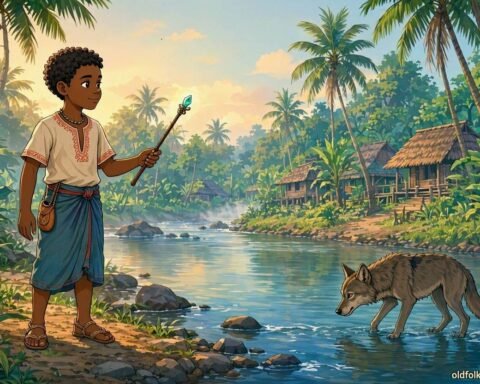
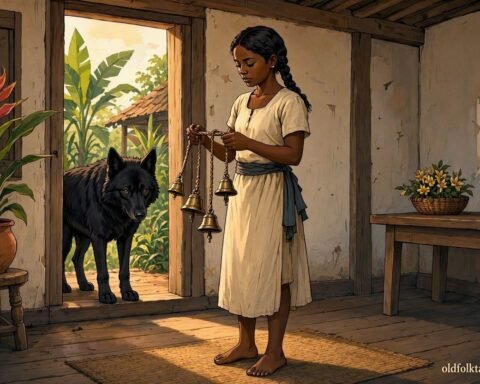
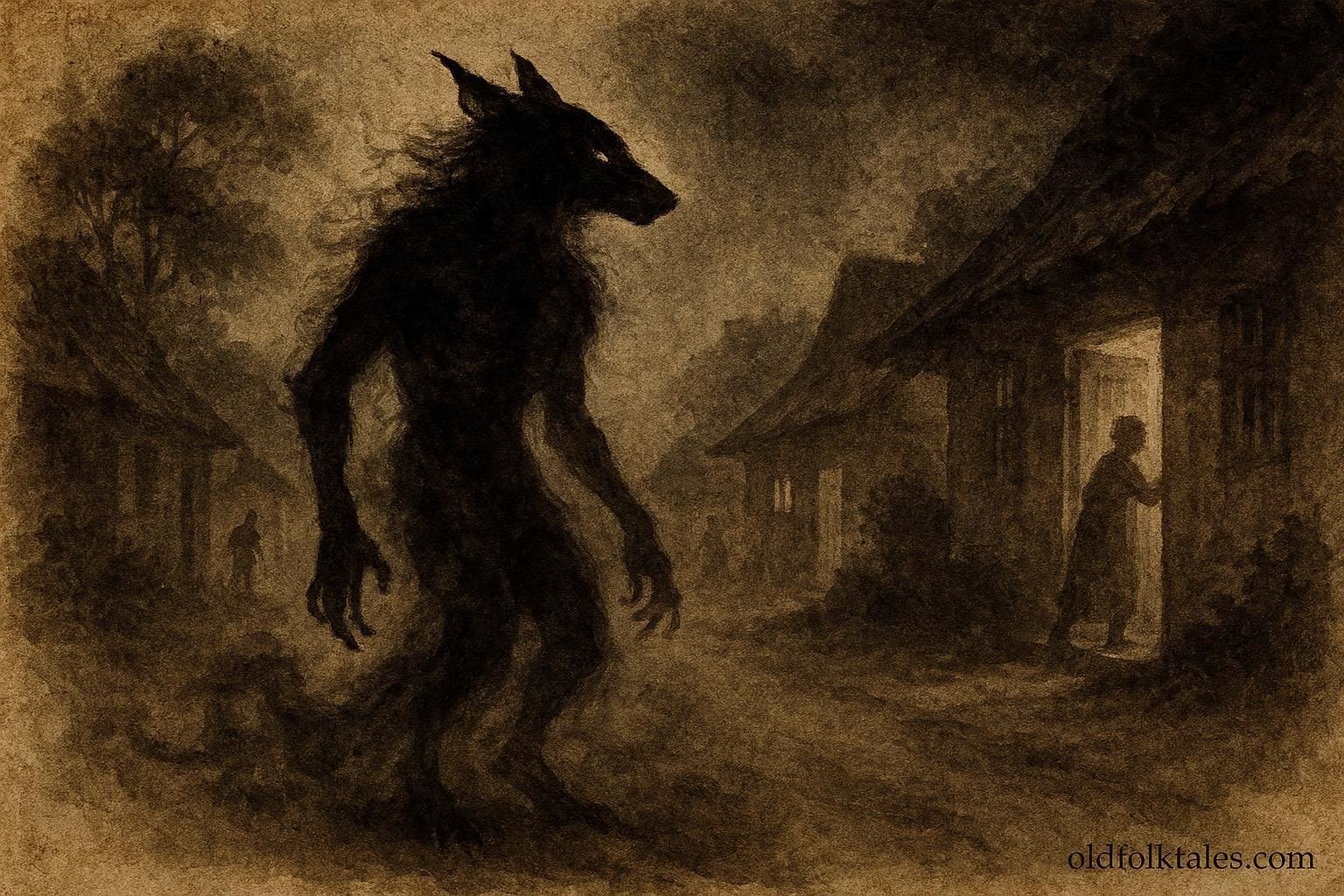
It can appear as an animal, silent, watching, moving just beyond the edge of sight. Or it can take the shape of something almost human, but not fully. A figure that resembles a person until you look too long, and then realize something is missing.
Or wrong.
Or changed.
In some versions of the story, it is a shapeshifter bound to no single body. In others, it is a wandering spirit caught between worlds, neither fully alive nor fully gone. But across all retellings, one idea remains constant:
It feeds on fear.
Not in a physical sense, but in a spiritual one. Fear is what draws attention to it. Fear is what gives it presence. Fear is what allows it to move closer in the mind of those who encounter it.
And so, the elders used its story carefully.
Not as entertainment.
But as warning.
In villages across Mauritius, especially during the colonial periods shaped by slavery and indenture, night travel was never taken lightly. Roads were narrow, dark, and often surrounded by unfamiliar silence. Without modern lighting, the night felt deeper, heavier, and more alive than the day.
It was in this environment that stories like the Duppy became part of communal life.
Children were told not to wander alone after sunset. Travelers were reminded to stay in groups. And those who had to move through the night did so with awareness, caution, and respect for what could not be seen.
Because in folklore, danger does not always come from what is real.
It comes from what is uncertain.
The Duppy, in this sense, is not only a creature.
It is a presence that represents the unknown fears of the night.
Those moments when sound carries too far. When silence feels intentional. When shadows seem to shift even when nothing is moving.
People would tell stories of encounters, always carefully. A glimpse at the edge of a road. A shadow that did not behave like a shadow should. A feeling of being followed when no one was visible behind them.
These stories were never identical.
But they shared the same emotional truth.
The night can play tricks on perception.
And fear can make those tricks feel real.
Over time, the Duppy became more than a warning about physical danger. It became a symbol of psychological awareness, an embodiment of how fear grows when left unchecked in the mind of someone alone in darkness.
In Afro-Creole folklore, influenced by West African spirit beliefs and French loup-garou legends brought through colonial contact, shapeshifting beings often represent boundaries between worlds. Human and spirit. Known and unknown. Safety and uncertainty.
The Mauritian Duppy carries all of these influences.
But it is shaped by the lived experience of the island itself.
A place where night travel once required courage.
Where silence could feel heavy enough to carry meaning.
And where storytelling became a way to explain what could not always be seen.
The Duppy does not always appear to attack.
In many retellings, its power lies in presence rather than action.
It unsettles.
It disrupts certainty.
It makes the familiar feel unfamiliar.
And in doing so, it reinforces a social truth shared through generations:
The night is not the same as the day, and should be treated with respect.
But the deeper layer of the story is not only about fear of the dark.
It is about how communities use storytelling to protect one another.
By giving shape to uncertainty, the tale transforms invisible risk into shared understanding. It turns personal anxiety into collective caution. It ensures that no one underestimates the dangers of isolation in environments where safety depends on awareness and togetherness.
In this way, the Duppy is both feared and functional.
It is a reminder wrapped in mystery.
A boundary expressed through story.
And like many oral traditions in Mauritius, it exists not only to frighten, but to guide behavior in a world where formal systems of safety once did not reach every path or village.
Even today, when told in modern settings, the story carries its atmosphere with it.
Not because people believe in it literally in the same way as before, but because it still speaks to something recognizable:
The feeling of being alone in the dark.
The instinct to look back when no one is there.
The quiet uncertainty that the world is larger than what can be immediately seen.
And so, the Duppy continues to walk, not necessarily through the land, but through memory.
Through storytelling.
Through the shared understanding that fear, when shaped into narrative, can become protection.
Looking for more? Explore the magic of East African folktales here
Moral Lesson
Fear in folklore is often used as a form of protection and discipline. The unknown dangers of isolation and night travel remind communities to stay cautious, connected, and aware. Stories like the Duppy transform fear into collective safety through shared understanding.
Knowledge Check
- What is the Duppy or Loup-Garou in Mauritian folklore?
It is a shapeshifting night spirit believed to roam villages and roads after sunset, appearing in animal or human-like forms. - What does the Duppy feed on in the story?
It is said to feed on fear and emotional energy rather than physical substance. - Why were children warned about the Duppy?
To discourage them from traveling alone at night and to promote safety and caution. - What cultural influences shaped the Duppy legend?
It was shaped by West African spirit beliefs and French loup-garou legends, adapted into Mauritian Creole folklore. - What does the Duppy symbolize?
It symbolizes fear of the unknown, night dangers, and the psychological effects of isolation. - What is the main lesson of the story?
That fear, when shared through storytelling, can serve as protection and encourage community safety and awareness.
Source: Documented in Creole oral storytelling traditions and comparative Caribbean/Indian Ocean folklore studies (anthropological works from 1960s–1990s)
Cultural Origin: Afro-Creole folklore of Mauritius, influenced by West African spirit beliefs and French loup-garou legends during slavery and indenture periods
Approx. Documentation Period: Oral tradition from 18th–19th century; written documentation in 20th-century folklore research