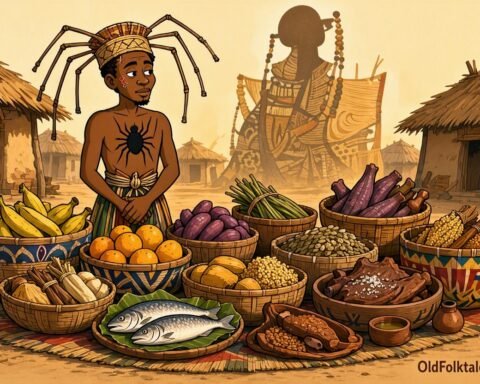
Life in the village moved with a quiet order that had been shaped by years of shared labor, careful planning, and mutual dependence. Each day began long before the sun rose fully, when the first signs of movement could be seen across the homes. Smoke drifted gently from cooking fires as meals were prepared with care, not in excess but in careful measure, because every portion of food represented effort, survival, and respect for the work that had been done to earn it. Farmers tended their fields with patience, hunters moved silently into the forest, and families stored their harvests with the understanding that what they had today would sustain them tomorrow. In such a community, where every grain of food carried meaning, trust was not simply important but necessary for life to continue in balance.
It was during such a time that the problem began.
At first, it was barely noticeable. A small amount of food missing here, a stored supply disturbed there. Nothing large enough to cause immediate alarm, yet enough to make people pause and wonder if they had made mistakes. But as the days passed, the losses continued. More households began to notice that their food stores were being touched without permission. The pattern became impossible to ignore.
Concern spread quietly at first, then more openly.
Neighbors began to speak to one another in lower voices. Some checked their storage places more often than before. Others began to suspect those closest to them. The unity that once defined the village slowly began to weaken under the weight of uncertainty. What had been a place of shared trust now carried an invisible tension that no one could fully explain.
Fascinated by this tale? Discover more North African folktales
The elders called a gathering.
They listened to the complaints carefully, asking questions and seeking patterns. But there were no clear answers. No one had seen the thief. No one could identify when or how the food was being taken. Only the evidence remained, small but consistent, growing with each passing day.
It was at this point that Tere appeared.
No one could clearly say when he arrived or where he had come from. He was simply there one day, standing at the edge of the village as though he had always been part of it. His presence was calm, but unusual. He did not speak immediately, nor did he ask questions. Instead, he observed.
He watched how people moved. He listened to how they spoke. He noticed what others overlooked.
After some time, he addressed the elders.
“I have heard of your problem,” he said quietly. “And I will help you find the truth.”
The villagers were uncertain. He was not one of them, yet there was something in his manner that made it difficult to dismiss him. The elders agreed to allow him to try.
Tere asked the villagers to gather all their food in one central place. He instructed them to leave it untouched and return the next morning. There was hesitation, because exposing all their supplies felt risky, but they agreed. They had little else to rely on.
That night, the village felt different.
The usual calm was replaced with anticipation. Some people stayed awake longer than usual. Others checked the central storage area from a distance, worried about what might happen. The idea of leaving food unattended created discomfort, but no one interfered.
When morning came, the villagers returned.
As expected, some of the food had been taken.
A wave of frustration moved through the crowd. The problem had not only continued, it had happened again under controlled conditions. Voices rose in confusion and anger.
But Tere remained calm.
He stepped forward and asked the villagers to look more closely.
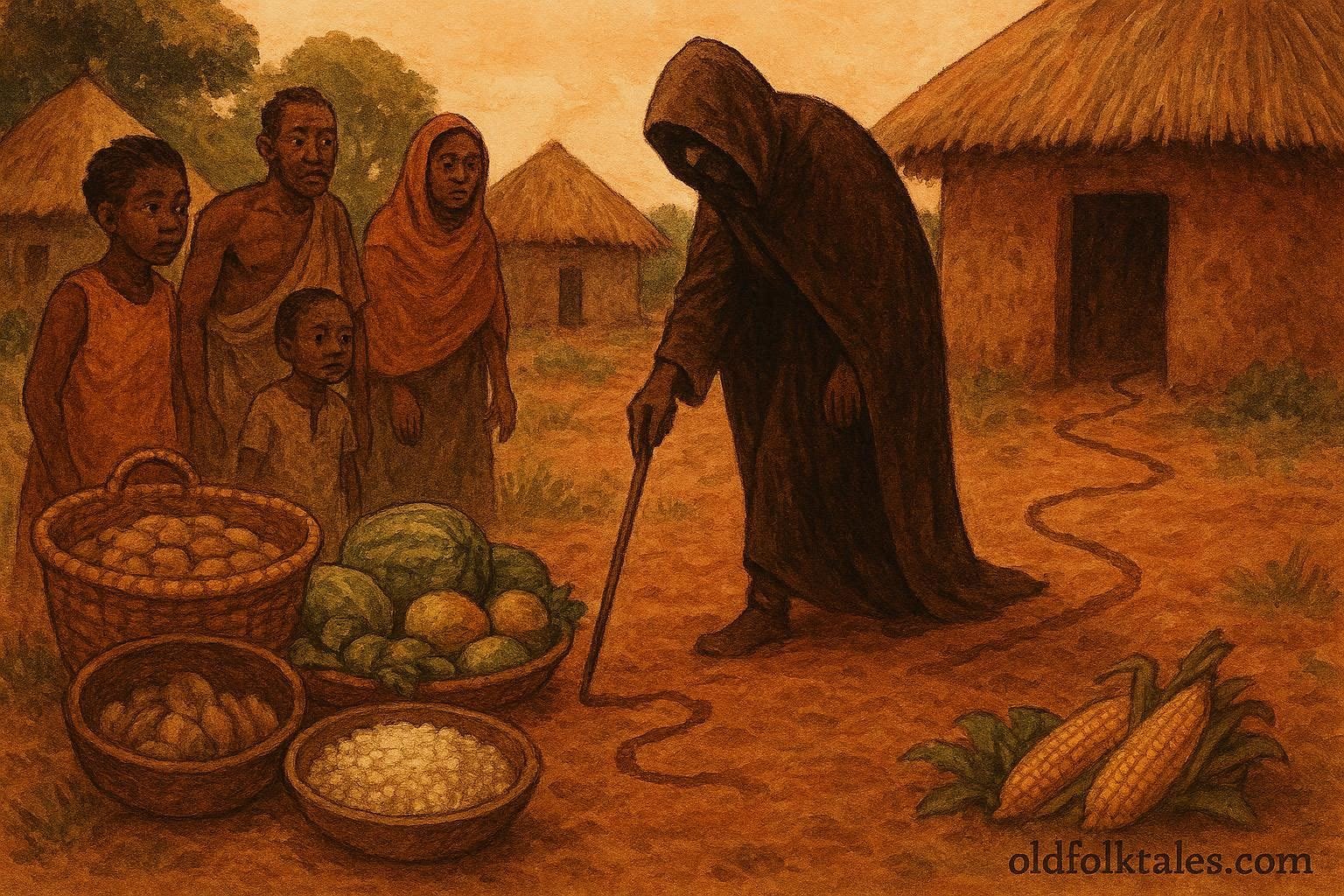
At first, nothing seemed different. But then small details began to emerge. A faint trail on the ground. Slight disturbances in the soil. Marks that had not been visible the day before. Tere examined them carefully and began to follow the direction they pointed.
The villagers followed him in silence.
The path led them through familiar spaces, between homes and storage areas, until it narrowed and stopped in front of a single dwelling. The atmosphere changed immediately. Conversations stopped. Movement slowed.
The person who lived there stepped outside.
At first, there was confusion. Then tension. Then silence.
Tere looked at the man calmly.
“The path has spoken,” he said.
The man tried to deny the accusation, but his words lacked certainty. The evidence had already formed a clear picture. The villagers watched, waiting.
Finally, the truth came out.
He admitted that he had been taking small amounts of food over time, believing it would go unnoticed. At first, it had seemed harmless, but as the days passed, the habit grew. What began as secrecy turned into burden, and what was once hidden could no longer remain so.
The village reacted with disappointment.
It was not only the theft that troubled them, but the breaking of trust that held their community together. The elders spoke and decided that the man would have to return what had been taken and work to rebuild the trust he had lost.
Tere said nothing more.
His role was complete.
Without explanation or ceremony, he left the village as quietly as he had arrived. Some said he was a traveler. Others believed he was something more, a presence that appeared when truth was needed.
But the lesson remained.
The village did not forget what had happened. They became more careful with one another, more aware that even small actions could affect the entire community. And they understood that truth, no matter how deeply hidden, always finds its way to the surface.
Click here to explore more Central African folktales
Moral Lesson
Hidden actions cannot remain secret forever, and truth will always reveal itself in time.
Knowledge Check
- What problem did the village face?
Food was being stolen from households - Who came to help the village?
A mysterious figure named Tere - What instruction did Tere give?
He asked villagers to gather food in one place - How was the thief discovered?
Through traces and evidence leading to his home - What did the thief admit?
He confessed to taking food secretly over time - What lesson did the village learn?
That truth always comes out eventually
Source
Central African folktale. Adapted from African Tales: Folklore of the Central African Republic by Polly Strong (1992).