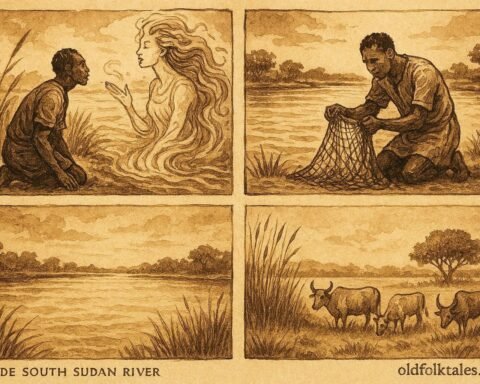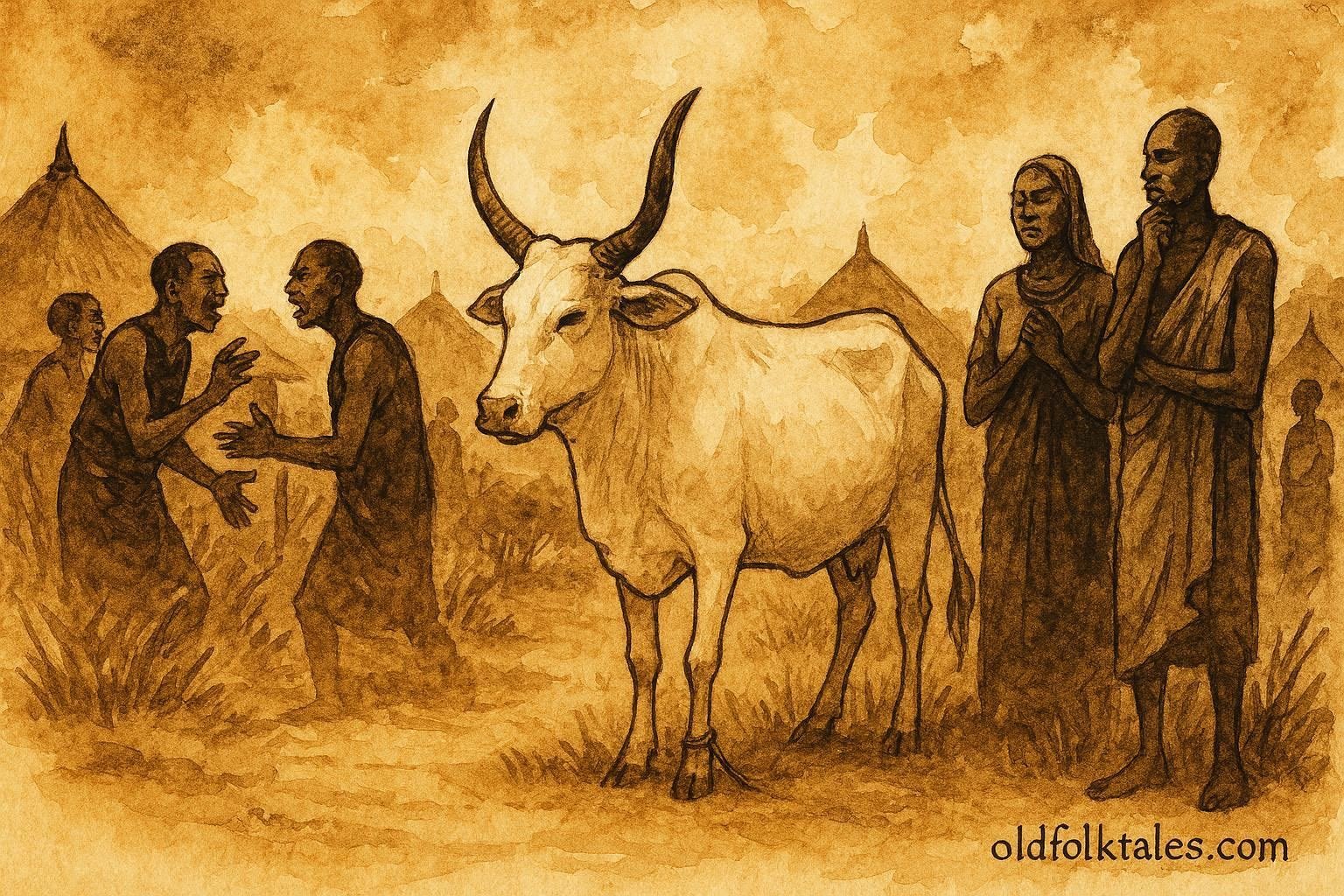
In the wide grasslands of South Sudan, where cattle are not only wealth but life itself, the relationship between people and animals is deeply sacred. Among the Dinka people, cattle are companions, symbols of identity, and a measure of survival.
They are not treated as ordinary animals.
Explore the wisdom and wonder of North African folktales
They are respected.
And in rare stories, they are believed to carry voices that go beyond the visible world.
This is the story of one such cow.
A cow that spoke only truth.
A Sacred Place in the Homestead
In a peaceful Dinka homestead stood a cow unlike any other.
She was not the largest, nor the strongest. But she was treated with special care. The elders said there was something different about her, something calm, something aware.
She moved gently among the herd, and people often felt a strange sense of clarity when they stood near her, as if their thoughts became more honest in her presence.
At first, no one understood why.
Then the speaking began.
The First Voice of Truth
It happened during a moment of disagreement.
Two villagers were arguing over the use of grazing land. Voices rose. Accusations followed. Others gathered, unsure of who was right.
The homestead became tense.
And then, something unexpected occurred.
The sacred cow lifted her head.
And she spoke.
“The land does not belong to anger,” she said.
The voices fell silent.
Everyone froze.
No one had ever heard an animal speak in such a way.
Her words were calm, but firm.
“The grass grows for all,” she continued. “But conflict will leave nothing for anyone.”
The argument stopped.
Not because someone won.
But because truth had entered the space.
Fear and Respect
At first, the villagers were amazed.
Some believed the cow was blessed.
Others believed she carried the voice of ancestral wisdom.
When she spoke, disputes often softened. People became more careful with their words. They thought before speaking.
But not everyone welcomed her voice.
Because truth, even when gentle, can be uncomfortable.
And discomfort often breeds fear.
The Second Conflict
Later, another dispute arose.
This time, it was between families.
A disagreement over cattle ownership had grown tense. People gathered again, expecting the usual escalation.
And again, the cow spoke.
“You argue over what you do not understand,” she said.
The crowd shifted uneasily.
One man protested, “What does a cow know of ownership?”
The cow turned her head slowly.
“I know what is taken,” she replied.
Silence followed.
Her words were not loud.
But they were heavy.
The truth she spoke did not favor either side.
It simply revealed what was real.
Division in the Village
As time passed, opinions about the cow began to split the community.
Some respected her deeply.
They said she prevented lies from growing.
They said she protected balance.
Others grew uneasy.
They feared her presence during disputes.
Because no one could hide behind excuses when she spoke.
Some began to avoid speaking near her.
Others began to fear her silence just as much as her voice.
The Turning Point
One day, a serious conflict arose within the homestead.
A disagreement between influential members of the community threatened to divide the group.
The arguments became harsh.
People gathered, expecting resolution, but tension filled the air.
The cow stood nearby, watching.
Then she spoke.
“Do you seek truth,” she asked, “or do you seek agreement?”
No one answered immediately.
The question itself exposed the problem.
Some wanted peace.
Others wanted victory.
But truth was not on either side.
Uncomfortable Clarity
The cow continued.
“Truth does not bend to comfort,” she said. “It stands even when people turn away.”
Her words unsettled many.
Because they were not gentle approval.
They were reflection.
And reflection is often difficult to accept.
A few villagers lowered their heads.
Others stepped back.
The disagreement lost its force, not because it was resolved, but because it was exposed.
The Community’s Choice
After that day, the villagers gathered without her presence.
They debated whether her voice was a blessing or a burden.
Some argued that truth should be guided by humans, not animals.
Others insisted that her words prevented deeper harm.
The community was divided, not by lies, but by honesty itself.
Eventually, a decision was made.
The cow would no longer be present during disputes.
Not because she was wrong.
But because her truth was too difficult to face directly.
A Quiet Return
After that, the cow remained in the homestead.
She no longer spoke during gatherings.
But her presence was still felt.
People became more careful with their words, even in her silence.
Because they knew she could speak.
And even when she did not, the memory of her truth remained.
Over time, something subtle changed.
The community began to reflect more deeply on its own decisions.
Not because of fear.
But because of awareness.
Looking for more? Explore the magic of East African folktales here
Moral Lesson
Truth is not always comfortable, but it is necessary. Wisdom can come from unexpected sources, and communities grow when they learn to face honesty with humility.
Knowledge Check
- What is “The Cow That Spoke Truth” about?
It is a Dinka folktale about a sacred cow that speaks truth during community conflicts. - Why was the cow considered special?
She was believed to carry wisdom and spoke only during moments of disagreement to reveal truth. - How did the villagers react to the cow’s words?
Some respected her honesty, while others feared her uncomfortable truths. - What role did truth play in the story?
Truth exposed hidden tensions and prevented false agreements, even when it caused discomfort. - Why did the community stop involving the cow in disputes?
They found her truth too direct and emotionally difficult to handle in public discussions. - What lesson does this African folktale teach?
It teaches that truth is necessary for justice, even when it challenges comfort or authority.
Source: African folktale, South Sudan.
Adapted from Dinka oral storytelling traditions documented in anthropological field notes and cultural archives (mid–late 20th century, c. 1970s).
Cultural Origin: Dinka people, South Sudan